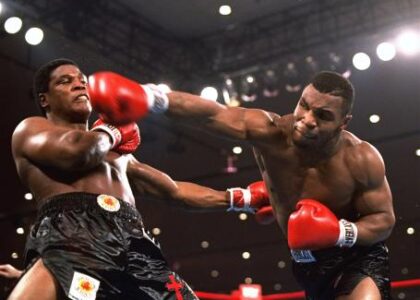
The left hook is one of the most important punches in boxing. It’s fast, powerful, versatile, and capable of attacking an opponent from an angle that straight punches cannot.
For an orthodox boxer, the left hook comes from the lead hand. It can be thrown to the head or body, used as a counterpunch, added to combinations, or used while changing angles.
But a good left hook isn’t created by simply swinging your arm.
The punch depends on balance, rotation, timing, distance, and proper technique. When all of those elements work together, the left hook can become one of the most dangerous weapons in a boxer’s arsenal.
Why the Left Hook Is So Effective
Most basic boxing combinations begin with straight punches.
The jab comes straight toward the opponent.
The right cross follows another relatively straight path.
The left hook changes the angle.
Instead of attacking directly through the front of the guard, the hook approaches from the side. This forces the opponent to defend punches coming from multiple directions.
A simple example is:
Jab → Cross → Left Hook
The opponent’s attention is initially directed toward the straight punches coming down the middle. The left hook then attacks from the side.
Changing angles is what makes the combination effective.
How to Throw the Left Hook
Start in your normal orthodox boxing stance.
Keep your hands up, chin tucked, knees slightly bent, and weight balanced.
Step 1: Stay Relaxed
Don’t tense your entire body before throwing.
Tension can slow the punch and make your intentions easier to recognize.
Stay relaxed until the moment of impact.
Step 2: Rotate the Body
The left hook isn’t powered by the arm alone.
Rotate your hips and torso as you throw.
Your lead shoulder moves with the punch while the rest of your body helps generate force.
Think about your body turning as a unit rather than your arm swinging independently.
Step 3: Pivot the Lead Foot
As the body rotates, the lead foot can pivot naturally.
This allows the hips to participate in the punch.
You don’t need an exaggerated pivot. The movement should match the distance, situation, and type of hook you’re throwing.
Step 4: Keep the Punch Compact
Avoid making a huge circular motion.
A wide hook takes longer to reach the target and creates more opportunities for your opponent to counter.
The punch should travel efficiently from your guard to the target.
Short. Sharp. Controlled.
Step 5: Keep the Right Hand Up
When your left hand leaves your guard, your right hand should remain protecting your face.
Don’t drop the opposite hand just because you’re concentrating on generating power.
Good offense and good defense should happen together.
Step 6: Return to Your Guard
Once the hook lands or misses, recover quickly.
Don’t leave the hand hanging near the opponent.
Bring it back into position and prepare to punch, defend, or move.
Palm Down or Palm Facing You?
You’ll see boxers throw hooks with slightly different hand positions.
Some turn the fist so the palm faces downward. Others maintain a more vertical fist with the palm facing inward.
The appropriate position can depend on range, individual mechanics, coaching style, and the type of hook being thrown.
Instead of becoming overly focused on one universal hand position, concentrate on the fundamentals:
Keep the wrist aligned, make contact with the proper part of the glove, stay balanced, and don’t allow the elbow or wrist to collapse awkwardly.
A qualified boxing coach can help determine which variation works best for your mechanics.
Don’t Swing Your Arm
One of the biggest beginner mistakes is treating the hook like a baseball swing.
The arm travels in a huge circle while the rest of the body barely moves.
That’s inefficient.
Your body should help create the force.
The hips rotate.
The torso rotates.
The shoulder rotates.
The punch follows.
A compact hook powered by proper rotation can generate considerable force without requiring a giant windup.
Finding the Correct Range
Distance is extremely important when throwing hooks.
Too far away and you’ll reach for the target.
Too close and you may not have enough space to rotate effectively.
This is why footwork and positioning matter.
Don’t force the hook from the wrong distance.
Move into the appropriate range first.
Then punch.
The Left Hook After the Cross
One of the most fundamental combinations in boxing is:
Jab → Cross → Left Hook
There is a mechanical reason this combination works so well.
The right cross rotates your body toward the left side. That rotation can help load your body for the left hook coming back in the opposite direction.
Instead of treating the punches as three separate movements, learn to make them flow together.
One → Two → Three.
Jab.
Cross.
Hook.
Then return to your stance.
Double Left Hook
Once you develop a solid left hook, you can throw it twice.
For example:
Left Hook to Body → Left Hook to Head
The first punch attacks downstairs.
The second attacks upstairs.
Because both punches come from the same hand, the combination can surprise opponents who expect alternating punches.
The key is resetting enough between hooks to maintain balance and power.
Don’t simply slap twice with the arm.
Left Hook to the Body
The left hook isn’t limited to the head.
For an orthodox boxer, the left hook to the body can be an important weapon.
Change levels using your knees, rotate through the hips, and deliver a compact hook.
Avoid bending excessively at the waist.
You want to remain balanced enough to defend or continue punching immediately afterward.
A common combination is:
Jab → Cross → Left Hook to Body
You can also follow the body hook upstairs:
Left Hook Body → Left Hook Head
Now the opponent has to defend two different levels with the same hand attacking.
The Left Hook as a Counter
The left hook can also be used as a counterpunch.
Instead of initiating the exchange, you wait for the opponent to create the opening.
For example, an opponent may step forward aggressively or throw a punch that temporarily exposes the side of their head.
A short left hook can exploit that opening.
Counter hooks depend heavily on timing.
This is where partner drills and mitt work become especially valuable.
The Check Hook
The check hook is a variation of the left hook that combines punching with movement.
As an opponent aggressively moves forward, an orthodox boxer throws the left hook while pivoting away.
Instead of simply retreating backward, you’re punching while creating an angle.
The technique can allow the opponent’s own forward momentum to contribute to the impact while moving you away from their line of attack.
The key isn’t simply the hook.
It’s:
Hook → Pivot → Reposition.
Use the Left Hook to Create Angles
A left hook can also help transition into new positions.
After throwing the hook, you may pivot instead of remaining directly in front of your opponent.
For example:
Jab → Cross → Left Hook → Pivot
Now you’ve attacked with a combination and changed your position.
Your opponent must turn and reset before attacking again.
This is where punching and footwork begin working together.
Set Up the Left Hook
Don’t throw the hook just because you want it to land.
Create the opening.
Use the jab.
Use the right hand.
Use feints.
Attack the body.
Change levels.
Make your opponent react.
For example:
Jab → Cross → Left Hook
or:
Jab Body → Cross Head → Left Hook Head
or:
Cross → Left Hook Body → Left Hook Head
The punches before the hook can help move the opponent’s guard into the position you want.
Practice the Left Hook on the Heavy Bag
The heavy bag is an excellent tool for developing your hook.
Start with individual punches.
Throw the left hook.
Reset.
Check your stance.
Repeat.
Once the mechanics feel comfortable, add combinations:
Jab → Cross → Left Hook
Cross → Left Hook
Left Hook Body → Left Hook Head
Jab → Cross → Left Hook → Cross
Move around the bag between combinations.
Don’t stand in one place throwing hooks endlessly.
Imagine the bag is an opponent and work on establishing the correct angle and distance before punching.
Practice on the Mitts
Focus mitts allow a trainer to adjust the target and teach you when to throw the hook.
Instead of simply memorizing combinations, you can eventually practice recognizing openings.
The trainer may present a straight target followed by a hook target.
Or the trainer can apply pressure and force you to counter.
This helps develop the connection between seeing the opening and throwing the punch.
Speed Before Maximum Power
Beginners often want to throw every hook as hard as possible.
That’s usually counterproductive.
Trying to generate maximum power can cause you to tense up, wind up, lose balance, and telegraph the punch.
First develop the movement.
Then develop speed.
Power comes from efficient mechanics, timing, accuracy, and rotation.
A punch doesn’t need to look dramatic to be effective.
Don’t Fall in Love With the Left Hook
A good left hook can become one of your favorite punches.
Just don’t make it your only punch.
If an opponent knows you’re constantly looking for the hook, they’ll begin preparing for it.
Use your jab.
Throw the cross.
Attack the body.
Feint.
Move.
Then bring the hook into the combination when the opening appears.
Boxing is about creating uncertainty.
The opponent shouldn’t know whether the next punch is coming straight down the middle, around the side, upstairs, or downstairs.
Make the Left Hook Part of Your Boxing
The left hook combines many of the skills that make boxing effective.
It requires balance.
It requires rotation.
It requires proper distance.
And at higher levels, it requires timing.
Start slowly and develop the mechanics before trying to generate maximum power.
Keep the punch compact.
Keep your opposite hand up.
Rotate through the body.
Recover your stance.
Then learn to connect the hook with your other punches and footwork.
Because a great left hook isn’t just a powerful punch.
It’s a punch that arrives from the angle your opponent forgot to protect.