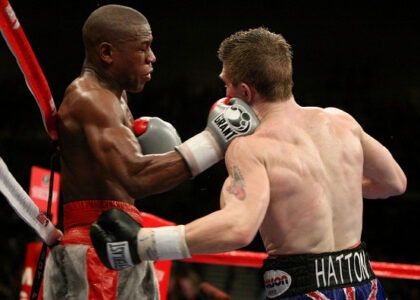
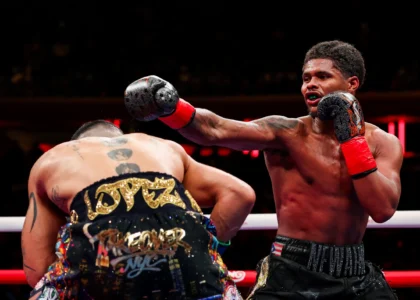
The cross is one of the most powerful fundamental punches in boxing. When thrown correctly, it combines the strength of the legs, rotation of the hips and torso, and speed of the rear hand into one straight, explosive punch.
For an orthodox boxer, the cross is normally thrown with the right hand. For a southpaw, it is typically thrown with the left.
The cross often follows the jab, but it can also be used as a counter, thrown to the body, or incorporated into combinations.
The key isn’t simply throwing the rear hand as hard as possible.
A great cross requires balance, rotation, timing, accuracy, and proper distance.
What Is the Cross?
The cross is a straight punch thrown with the rear hand.
For an orthodox boxer:
Jab = Left Hand
Cross = Right Hand
For a southpaw, the opposite applies.
Because the rear hand begins farther from the opponent, the boxer has more opportunity to rotate the body into the punch.
That rotation can generate considerable power.
But the cross should still travel along a short, efficient path.
Power doesn’t require a wide punch.
Start From a Balanced Stance
Every good cross begins with your stance.
Keep your feet properly positioned, knees slightly bent, hands up, and chin tucked.
Your weight should allow you to move in either direction.
If you’re already off balance before throwing, trying to generate more power will usually make the problem worse.
Your stance is the foundation of the punch.
Power Starts From the Ground
A powerful cross isn’t thrown with the arm alone.
The movement begins from the floor.
As you throw:
Rear foot rotates → Hip turns → Torso rotates → Shoulder follows → Fist reaches the target
The entire body works together.
Think about transferring force through your body rather than trying to muscle the punch with your shoulder and arm.
When your mechanics are correct, power becomes the result of efficient movement.
Rotate the Rear Foot
As the cross travels forward, the rear foot should rotate naturally.
For an orthodox fighter throwing the right cross, the rear heel may turn outward as the hip comes forward.
This allows the lower body to participate in the punch.
Don’t exaggerate the pivot.
You aren’t trying to spin.
Rotate enough to generate force while remaining balanced.
After throwing, you should still be capable of defending, moving, or continuing your combination.
Turn the Hip
Hip rotation is one of the most important elements of a strong cross.
As the rear hand travels toward the target, rotate the rear hip forward.
The torso and shoulder follow.
This creates a chain of movement that transfers energy into the punch.
Avoid throwing the hand first and rotating afterward.
The movements should eventually happen together.
Throw Straight to the Target
The cross should travel directly toward the target.
Don’t allow the elbow to flare dramatically outward.
Don’t make a large circular motion.
And don’t pull your hand backward before throwing.
A straight punch reaches the target faster.
Think:
Straight out → Contact → Straight back.
Efficiency makes the punch harder to see and easier to recover.
Don’t Telegraph the Cross
One of the biggest mistakes beginners make is winding up before throwing a hard right hand.
They pull the glove backward.
They tense the shoulder.
They rotate before the punch begins.
All of these movements can warn the opponent.
Instead, throw directly from your normal guard.
The opponent shouldn’t see a large preparation.
The power should appear during the punch—not before it.
Protect Your Chin
As the cross extends, the rear shoulder naturally comes toward your chin.
Use that position to help protect yourself.
Keep the chin tucked.
Your lead hand should remain near your face rather than dropping as you throw.
A good punch shouldn’t require you to abandon your defense.
Don’t Overreach
Distance determines whether the cross is available.
If your opponent is too far away, don’t lean dramatically forward trying to reach them.
Use your feet to establish the proper range.
Overreaching can pull your head beyond your base and leave you vulnerable to a counter.
Remember:
Use your feet to find the range. Use your hands to attack once you’re there.
Set Up the Cross With the Jab
The most fundamental setup is:
Jab → Cross
The classic 1-2.
The jab can establish range, occupy the opponent’s vision, and force a defensive reaction.
Then the cross follows.
As your jab returns, your rear hand should already be prepared to travel toward the target.
The combination should eventually feel like one continuous movement.
Double Jab Into the Cross
Another useful combination is:
Jab → Jab → Cross
The first jab establishes distance.
The second can help you close the gap or keep the opponent occupied.
Then the cross follows.
The double jab can be especially useful against opponents who continually move backward.
Instead of chasing them, you’re punching your way into range.
Change Levels
The cross can attack both the head and body.
Try:
Jab Head → Cross Body
The jab directs attention upstairs before the cross changes levels.
You can reverse it:
Jab Body → Cross Head
Now you’re using the body attack to create an opening upstairs.
Changing levels makes your combinations more difficult to defend.
Use the Cross as a Counter
The cross is also an effective counterpunch.
One classic example is countering the jab.
As your opponent throws their lead hand, move your head away from the path of the punch and fire the cross.
Opponent Jabs → Slip → Cross
Timing is critical.
You’re trying to attack during the opening created by your opponent’s punch.
A well-timed counter doesn’t always require maximum power.
Your opponent’s movement can help create the impact.
Cross Into the Left Hook
The cross naturally connects with the lead hook.
Try:
Cross → Left Hook
The cross rotates your body in one direction.
That movement can help load your body to rotate back with the hook.
Add the jab:
Jab → Cross → Left Hook
Now you have the classic 1-2-3.
Straight.
Straight.
Around the side.
You’re changing the angle of attack with each stage of the combination.
Cross-Hook-Cross
Another useful combination is:
Cross → Left Hook → Cross
Your body rotates from one side to the other and back again.
The punches should flow.
Don’t try to make every punch a knockout shot.
A fast, accurate combination is often more effective than three slow punches thrown with maximum force.
Follow the Cross With Movement
Don’t assume the exchange is finished after you throw the right hand.
Your opponent may counter.
After the cross, you can:
Move your head.
Throw the hook.
Pivot.
Step away.
Continue the combination.
For example:
Jab → Cross → Slip
or:
Jab → Cross → Left Hook → Pivot
This teaches you to connect offense, defense, and movement.
Practice the Cross on the Heavy Bag
Start with technique rather than maximum power.
Throw a single cross.
Reset.
Check your feet.
Check your balance.
Check your guard.
Then repeat.
Once the mechanics become comfortable, practice:
Jab → Cross
Double Jab → Cross
Jab → Cross → Left Hook
Cross → Hook → Cross
Jab Body → Cross Head
Move around the bag between combinations.
Don’t simply stand directly in front of it throwing power punches.
Practice With the Mitts
Mitt work allows a trainer to change distance and create more realistic situations.
A coach can have you jab into range before throwing the cross.
They can simulate an opponent’s jab so you can practice slipping and countering.
They can also force you to defend immediately after throwing.
This helps develop the ability to recognize when the cross is available rather than simply throwing it because it’s part of a memorized combination.
Speed Before Maximum Power
Trying to throw every cross at 100 percent power can make you tense.
Tension slows punches.
Start by developing clean mechanics.
Stay relaxed.
Rotate properly.
Punch straight.
Maintain your balance.
Return the hand.
Once the movement becomes efficient, power can increase naturally.
Bring the Cross Back Home
The punch isn’t finished when it reaches the opponent.
Bring the rear hand immediately back to your guard.
Leaving the hand extended can expose you to counters and delay your next movement.
Think:
Throw → Land → Return → Ready.
That final step matters.
Master the Cross
A powerful cross isn’t simply a hard right hand.
It’s the product of proper distance, timing, rotation, accuracy, and balance.
Use the jab to create the opening.
Drive from the floor.
Rotate through the hips.
Keep the punch straight.
Protect your chin.
Bring the hand back.
Then be ready to punch, defend, or move again.
Because when you master the cross, you’re not simply learning how to punch harder.
You’re learning how to deliver your power at exactly the right time and exactly the right place.