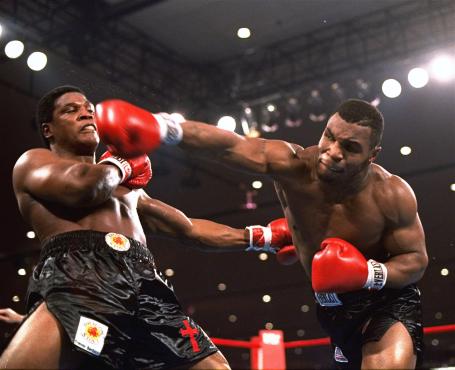
The overhand right is one of the most powerful and recognizable punches in boxing. It can travel over an opponent’s jab or guard, arrive from an unexpected angle, and turn a fight around when it lands cleanly.
For an orthodox boxer, the punch is thrown with the rear right hand. For a southpaw, the same principles generally apply to the rear left hand.
But an effective overhand isn’t simply a wild looping punch.
The best overhand rights combine timing, positioning, hip rotation, accuracy, and proper setup. Learning those elements can turn the punch from a desperate power shot into a calculated weapon.
What Is an Overhand Right?
The overhand right is a rear-hand punch that travels in a slightly arcing path toward the opponent.
Compare it with a traditional straight right.
A straight right travels directly toward the target. The overhand approaches from a higher angle, allowing the punch to potentially travel over or around an opponent’s lead hand and guard.
That difference makes it particularly useful against certain defensive positions and predictable jabs.
Think of the punch as going over the opponent’s attack rather than directly through it.
Why the Overhand Right Works
Boxers become accustomed to defending straight punches.
A jab comes straight.
A cross comes straight.
An overhand changes the angle.
The punch can be particularly effective when an opponent repeatedly extends their lead hand. As the jab comes forward, an opening may temporarily appear around the side or over the top.
A properly timed overhand can exploit that opening.
The punch also carries considerable power because the rear hand allows you to rotate the hips, shoulders, and torso into the shot.
But power shouldn’t be the first priority.
Accuracy and timing make the power useful.
How to Throw the Overhand Right
Start in your normal orthodox stance with your hands up, chin protected, and weight balanced.
Step 1: Establish Your Range
Don’t reach for the punch.
You should be close enough that the overhand can reach the target without forcing you to lean excessively forward.
Use your jab and footwork to establish the correct distance.
Step 2: Rotate the Rear Hip
Power begins from the floor.
As you throw, rotate the rear hip and shoulder forward. Your rear foot should turn naturally with the movement.
The arm shouldn’t generate all the power by itself.
Think:
Feet → Hips → Torso → Shoulder → Punch.
The body works together.
Step 3: Bring the Punch Over the Top
Instead of traveling perfectly straight, the fist follows a controlled arc toward the target.
Don’t exaggerate the looping motion.
The larger the arc becomes, the longer the punch takes to arrive.
Keep it tight and efficient.
Step 4: Protect Your Chin
Your lead hand should remain ready to protect you while the rear hand is punching.
Keep your chin tucked.
Throwing a power punch doesn’t mean abandoning your defense.
Step 5: Return to Your Guard
After the punch lands—or misses—bring the hand back.
Don’t leave your arm extended.
A missed overhand can create an opportunity for your opponent to counter, so recovering your stance is just as important as throwing the punch.
Don’t Wind Up
One of the biggest mistakes beginners make is loading the overhand right.
They pull the hand backward before throwing.
That may feel powerful, but it also announces the punch.
An experienced opponent sees the shoulder move, recognizes what’s coming, and reacts before the punch arrives.
Your overhand should begin from approximately the same position as your normal right hand.
Make the opponent wonder:
Is the right hand coming straight or over the top?
That uncertainty makes both punches more effective.
Set It Up With the Jab
The jab is one of the easiest ways to set up the overhand right.
Try:
Jab → Overhand Right
The jab can occupy the opponent’s attention and help establish distance.
You can also double the jab:
Jab → Jab → Overhand Right
If the opponent becomes focused on defending the lead hand, the rear hand can follow from another angle.
The jab doesn’t always have to land.
Sometimes its purpose is simply to create the reaction that makes the next punch possible.
Use It Against the Jab
One of the classic opportunities for an overhand right occurs when an opponent throws a predictable jab.
Instead of simply blocking the jab, you can move your head away from its path while bringing the rear hand over the top.
The timing is critical.
You aren’t waiting until the opponent has completely finished the jab.
You’re attempting to counter during the opening created by their attack.
This should first be practiced slowly with a coach or partner.
Trying to learn the timing during hard sparring is not the place to start.
Change Levels Before Throwing
Changing levels can help disguise the overhand.
A small bend in the knees or slight defensive movement can make the opponent think you’re preparing to attack the body or slip a punch.
From there, rotate into the overhand.
But don’t crouch dramatically.
Large movements waste time and can telegraph your intentions.
Boxing rewards efficiency.
Small movements can create big openings.
Jab to the Body, Overhand to the Head
Another useful setup is attacking different levels.
Try:
Jab to Body → Overhand Right to Head
The body jab directs the opponent’s attention downward.
If they react by lowering their guard or focusing on the body attack, the overhand can follow upstairs.
This is another example of an important boxing principle:
Attack one target to create another.
Use Feints
You don’t always need to throw the first punch.
Sometimes a feint is enough.
Feint the jab.
Watch the opponent’s reaction.
If they reach to parry or raise their guard in anticipation, that movement may create an opening for the overhand.
Good fighters don’t simply throw combinations.
They manipulate reactions.
Don’t Throw It From Too Far Away
The overhand right becomes dangerous for the person throwing it when they’re outside proper range.
If you lean forward trying to reach the opponent, your feet may fall behind your upper body.
Now you’re off balance.
If the punch misses, your opponent has an opportunity to counter.
Use your feet to establish distance first.
Move into range. Then punch.
Don’t use the punch itself to drag your body into range.
Follow the Overhand With a Hook
The overhand doesn’t have to end the combination.
A natural follow-up is the lead hook.
Try:
Jab → Overhand Right → Lead Hook
The overhand rotates your body in one direction, helping load the opposite side for the hook.
When performed correctly, the punches flow together.
Another option is:
Overhand Right → Lead Hook to Body
Now you’re changing levels after the power punch.
Overhand Right to Uppercut
At closer range, you can also follow the overhand with an uppercut.
For example:
Overhand Right → Lead Uppercut → Lead Hook
The important thing is not memorizing endless combinations.
Understand how one punch changes your body’s position and how that position can prepare the next punch.
Good combinations should flow rather than feel like a collection of unrelated movements.
Practice on the Heavy Bag
The heavy bag is an excellent tool for developing the overhand right.
Start slowly.
Throw:
Jab → Overhand Right
Reset.
Move around the bag.
Then repeat.
Once your mechanics improve, add combinations:
Jab → Overhand → Hook
Double Jab → Overhand
Body Jab → Overhand
Overhand → Hook Body → Hook Head
Don’t stand directly in front of the bag throwing overhands repeatedly.
Move between combinations and practice establishing the correct distance.
Practice on the Mitts
Focus mitts allow a trainer to work on the timing of the overhand.
A coach can simulate a jab, prompting the boxer to move their head and throw the overhand counter.
Eventually, the coach can mix different punches and movements so the fighter has to recognize when the opportunity actually exists.
That’s important.
You don’t want to develop the habit of throwing an overhand every time you see movement.
You want to recognize the right moment.
Don’t Fall in Love With Power
The overhand right can produce spectacular results.
That can also become a problem.
Once fighters realize they can generate significant power with the punch, they sometimes begin throwing it constantly.
Now the punch becomes predictable.
An opponent can anticipate it, move underneath it, step away, or counter.
Use the overhand as one weapon among many.
Establish your jab.
Throw straight punches.
Attack the body.
Use feints.
Move your head.
Then, when the opponent begins reacting to those weapons, bring the overhand into play.
Timing Beats Force
A powerful overhand right is impressive.
A well-timed overhand right is dangerous.
The difference comes from understanding when and why you’re throwing it.
Don’t wind up.
Don’t reach.
Don’t sacrifice your balance trying to generate maximum power.
Create the opening first.
Then rotate, throw, recover, and be ready for what comes next.
Because the best power punches in boxing aren’t simply thrown hard.
They’re the punches your opponent doesn’t see coming.