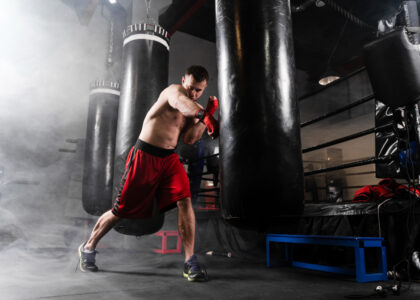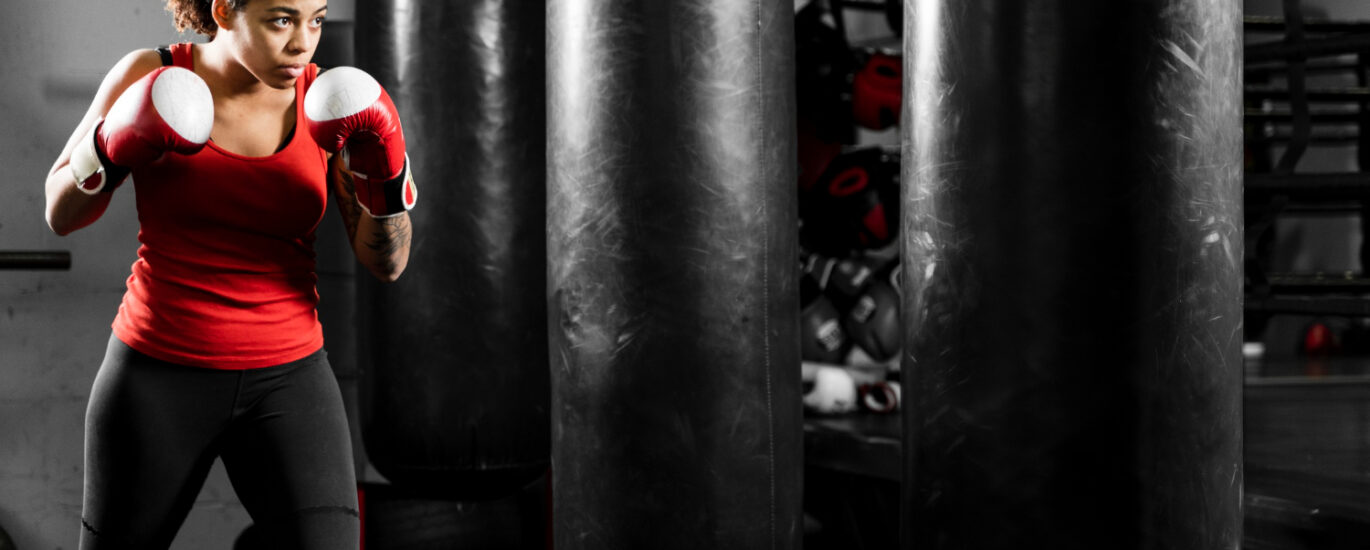
Anyone can hit a heavy bag. The real skill is learning how to train on a heavy bag with purpose.
A good heavy bag workout isn’t just three minutes of throwing punches as hard and fast as possible. Each round should have an objective. You might work on your jab, combinations, body punches, defense, movement, power, or conditioning.
When you give every round a purpose, the heavy bag becomes one of the best tools for developing complete boxing skills.
Round 1: Establish Your Jab
Start simple.
Use the first round to work almost entirely behind your jab. Throw single jabs, double jabs, and jabs while moving forward and backward.
Focus on snapping the punch instead of pushing it.
After every jab, bring your hand immediately back to your guard.
Don’t forget your feet. Circle the bag and change your position throughout the round.
Round 2: Work the Jab-Cross
Now bring your rear hand into the workout.
Throw:
Jab → Cross
Concentrate on rotating your hips and shoulders through the cross while maintaining your balance.
After landing the combination, move.
Don’t automatically stand in the same spot and throw it again.
Attack, reposition, and attack from another angle.
Round 3: Add the Hook
Build your combination:
Jab → Cross → Lead Hook
The punches should flow together rather than feeling like three separate movements.
Pay particular attention to your hip rotation on the cross and hook. Your body should rotate through the combination while your feet allow the movement to happen naturally.
Stay balanced enough to punch, defend, or move immediately afterward.
Round 4: Attack the Body
Not every punch should be aimed at the head.
Use this round to practice changing levels.
Mix straight punches and hooks to the body with punches upstairs.
Try:
Jab to Head → Cross to Body
Jab → Cross → Lead Hook to Body
Cross to Body → Lead Hook to Head
Imagine where an opponent’s ribs, solar plexus, and head would be.
Train yourself to see different targets.
Round 5: Punch and Move
This round is about footwork.
Throw two or three punches and immediately change position.
You can:
Pivot.
Circle.
Step back.
Step to the side.
Create a new angle.
Then attack again.
Avoid spending the entire round standing directly in front of the bag.
Round 6: Punch and Defend
The heavy bag doesn’t punch back, but you should pretend that it does.
After each combination, perform a defensive movement.
For example:
Jab → Cross → Slip
Jab → Cross → Hook → Roll
Cross → Hook → Pivot
Jab → Cross → Step Back
This develops the habit of protecting yourself immediately after attacking.
Round 7: Power
Now it’s time to turn up the power.
But don’t abandon your technique.
Power should come from proper mechanics—not wild punches.
Use your legs, rotate your hips, turn your shoulders, and drive through the punch while maintaining control.
Throw short combinations with deliberate power, reset, and attack again.
Quality is more important than throwing hundreds of punches.
Round 8: Speed
Switch from power to speed.
Stay loose and throw fast combinations in short bursts.
Try:
Jab → Cross → Jab → Cross
Then move.
Attack again.
Your punches should be quick and sharp without sacrificing technique.
Remember: tension can slow you down. Stay relaxed until the moment of impact.
Round 9: Conditioning
Now test your endurance.
Increase your punch volume while continuing to move around the bag.
Your technique will become harder to maintain as you get tired.
That’s the point.
Keep your hands up.
Keep your stance.
Keep rotating your hips.
Keep breathing.
Don’t allow fatigue to completely destroy your fundamentals.
Round 10: Put Everything Together
Your final round is freestyle boxing.
Treat the bag like an opponent.
Move around it.
Jab your way inside.
Throw combinations.
Attack the body.
Change your speed.
Slip an imaginary counter.
Pivot away.
Reset.
Then attack again.
Instead of simply hitting the bag, box the bag.
Keep Your Hands Up
One of the easiest bad habits to develop on the heavy bag is dropping your hands.
The bag isn’t going to counter you, so it’s tempting to relax after throwing a combination.
Don’t.
Bring every punch back to your guard.
Imagine that every time you finish punching, your opponent is preparing to fire back.
Don’t Push Your Punches
A good punch should snap into the bag and return.
If you’re constantly pushing the bag away with your punches, you may be leaving your hands extended too long.
Hit.
Retract.
Reset.
The bag should receive the punch—not carry your fist forward.
Use Your Entire Body
Your arms aren’t the only source of punching power.
Effective punches involve a coordinated movement through your feet, legs, hips, torso, shoulders, and hands.
When those movements work together, you can generate significant power without swinging wildly.
That’s why technique should always come before power.
Train With a Purpose
Heavy bag training can build power, speed, endurance, combinations, defense, and footwork—but only if you use it correctly.
Don’t walk up to the bag and start throwing random punches.
Give every round an objective.
Work the jab. Build combinations. Attack the body. Move your feet. Practice defense. Develop power. Increase your speed. Test your conditioning.
When you start approaching heavy bag training this way, you’re no longer just getting a workout.
You’re learning how to box.