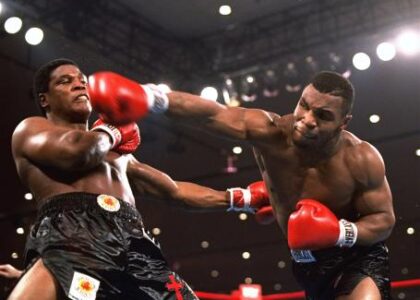
Head punches get attention, but experienced boxers understand the importance of attacking the body.
A good body shot can slow an opponent down, disrupt their breathing, reduce their movement, and make them think twice about keeping a high guard. Unlike a head shot that may produce an immediate reaction, body punching can also be an investment. The punches you land early in a fight may begin paying off several rounds later.
That’s why every complete boxer should learn how to attack both the head and the body.
Why Body Shots Matter
When fighters first start boxing, they naturally focus on the head. It’s an obvious target, and landing a clean punch to the face feels rewarding.
But constantly headhunting makes a fighter predictable.
An opponent who knows every punch is coming upstairs can concentrate almost entirely on protecting the head.
Body punches force them to defend multiple levels.
Once an opponent starts lowering their elbows to protect the body, openings can appear upstairs. When they raise their guard again, the body becomes available.
Good body punching creates a constant dilemma:
Protect the head or protect the body?
The best fighters make their opponents worry about both.
Body Punching Is About Placement
Power matters, but accurate placement matters just as much.
Legal body punches are directed above the belt and below the opponent’s head, with common targets including the torso and sides of the body.
The goal isn’t simply to swing as hard as possible.
A short, accurate punch delivered with proper rotation can be far more effective than a wild punch that leaves you exposed.
This is particularly important with body hooks and uppercuts, where compact technique allows the boxer to generate power without sacrificing balance.
The Jab to the Body
The jab to the body is one of the simplest body punches to add to your boxing.
Instead of throwing the jab toward the opponent’s head, slightly change levels and direct it toward the torso.
The body jab can help disrupt an opponent’s rhythm and make it more difficult for them to predict where your next jab will go.
You can alternate:
Jab to the head → Jab to the body
or:
Jab to the body → Jab to the head
The more comfortable you become changing levels, the harder it becomes for an opponent to anticipate your attack.
One important point: don’t bend excessively at the waist or stare at the target before throwing. Those movements can telegraph your intention.
The Straight Right to the Body
For an orthodox fighter, the straight right can be an effective body punch.
Change levels slightly while maintaining your stance, then drive the rear hand straight toward the body.
Rotate through the hips and shoulders just as you would with a straight right to the head.
After landing, bring the hand back quickly.
A common mistake is reaching too far forward. Overextending can leave you off balance and vulnerable to a counter.
If the opponent is outside your range, use your feet to establish distance rather than reaching for the target.
Southpaw fighters can apply the same principles using the rear left hand.
The Lead Hook to the Body
The lead hook is one of boxing’s classic body punches.
For an orthodox fighter, this means using the left hook.
Bend your knees slightly, rotate through your hips and torso, and deliver a compact hook to the body.
Avoid dropping your hand dramatically before throwing.
A large windup tells your opponent exactly what’s coming.
The punch should travel efficiently from your normal guard position to the target and return quickly.
The Liver Shot
One of the most famous body punches in boxing is the liver shot.
The liver sits primarily on the right side of the body, which makes the opponent’s right side an important target for a well-placed left hook from an orthodox fighter.
A clean punch in this area can produce a delayed reaction. A fighter may initially appear capable of continuing before suddenly becoming overwhelmed by the effect of the punch.
But you shouldn’t become obsessed with hunting for one perfect liver shot.
Instead, create the opening through combinations, positioning, and changes in level.
The Rear Hook to the Body
The rear hook can also be effective at close range.
Because the rear hand travels farther than the lead hand, distance becomes particularly important.
Stay compact.
Rotate through the hips.
Don’t swing your arm around your opponent.
If you’re too far away, reposition instead of reaching.
At close range, a short rear hook can become part of combinations that alternate between both sides of the body.
Body Uppercuts
Uppercuts aren’t limited to the chin.
Short uppercuts can also be directed toward the center or sides of the torso when fighting at close range.
These punches can be especially useful when an opponent maintains a tight guard with their elbows positioned in front of the body.
Instead of swinging around the guard, an uppercut can travel through an opening in the middle.
Keep the movement short.
A huge uppercut that starts near your waist takes too long and exposes your head.
Set Up the Body Shot
One of the biggest mistakes beginners make is looking directly at the body and throwing a single obvious punch.
Experienced opponents will see it coming.
Instead, use other punches to create the opening.
For example:
Jab to Head → Cross to Head → Lead Hook to Body
The first two punches bring the opponent’s attention upstairs before the third punch changes levels.
You can also reverse the strategy:
Jab to Body → Cross to Head
Now the body attack helps create the opening upstairs.
Mixing levels is what makes the combinations difficult to defend.
Head-Body-Head
One of the best habits to develop is changing levels during combinations.
Instead of throwing three or four punches toward the same target, alternate between the head and body.
For example:
Jab to Head → Cross to Body → Lead Hook to Head
or:
Jab → Cross → Lead Hook to Body → Lead Hook to Head
or:
Lead Hook to Body → Cross to Head → Lead Hook to Head
The exact combination matters less than the concept.
Make your opponent defend multiple targets.
Don’t Drop Your Hands
Body punching creates opportunities for both fighters.
When you lower your level to attack the body, your opponent may try to counter your head.
This makes defensive responsibility extremely important.
Keep the opposite hand protecting your face while throwing.
For example, when throwing your lead hook to the body, your rear hand should remain in position to protect your head.
After landing, return the punching hand to your guard.
Don’t admire your work.
Punch and protect.
Use Your Legs
Body punching shouldn’t involve simply bending forward at the waist.
Use your knees to change levels.
This allows you to remain balanced and ready to move.
A boxer who bends too far forward may have difficulty defending, countering, or quickly returning to position.
Think about lowering your entire stance slightly rather than folding your upper body toward the opponent.
Practice Body Shots on the Heavy Bag
The heavy bag is an excellent place to develop body-punching mechanics.
Don’t spend the entire round punching at head height.
Imagine the bag represents a real opponent and divide it into different target levels.
Practice combinations such as:
Jab Head → Cross Head → Hook Body
Jab Body → Cross Head
Cross Head → Lead Hook Body → Lead Hook Head
Lead Hook Body → Cross Head
Move around the bag between combinations instead of remaining stationary.
This teaches you to create angles before attacking the body.
Practice With the Mitts
Focus mitts and body protectors allow a trainer to work on body punching more realistically.
A coach can present targets at different heights, forcing the boxer to recognize whether the opening is upstairs or downstairs.
Instead of memorizing long combinations, fighters can eventually learn to react to the targets they see.
This develops an important skill:
Don’t throw where you want the opening to be. Throw where the opening actually is.
Invest in the Body
Body punching often becomes more valuable as a fight progresses.
A fighter may be quick and mobile early in a bout. Repeated attacks to the body can make maintaining that movement more difficult as the rounds accumulate.
That’s why fighters often describe body punching as an investment.
You may not immediately see the return.
Keep working.
Eventually an opponent who was constantly moving may begin standing still longer.
Their guard may drop.
Their breathing may become heavier.
Their combinations may become shorter.
That’s when the investment begins paying dividends.
Don’t Become a Head Hunter
A complete boxer doesn’t attack only one target.
They attack openings.
Sometimes that opening is the head.
Sometimes it’s the body.
The best approach is often to make the opponent uncertain about where the next punch is going.
Work upstairs.
Change levels.
Attack downstairs.
Then return upstairs.
When you learn to combine head and body attacks naturally, your opponent has twice as much to think about.
And in boxing, making your opponent think about one target is often exactly how you create an opening somewhere else.
Don’t just hunt for the knockout. Break your opponent down, one punch at a time.