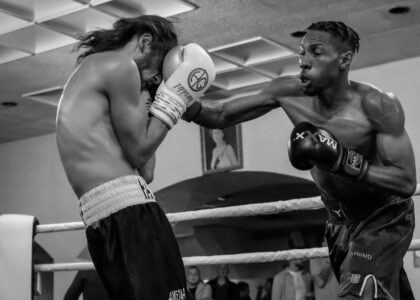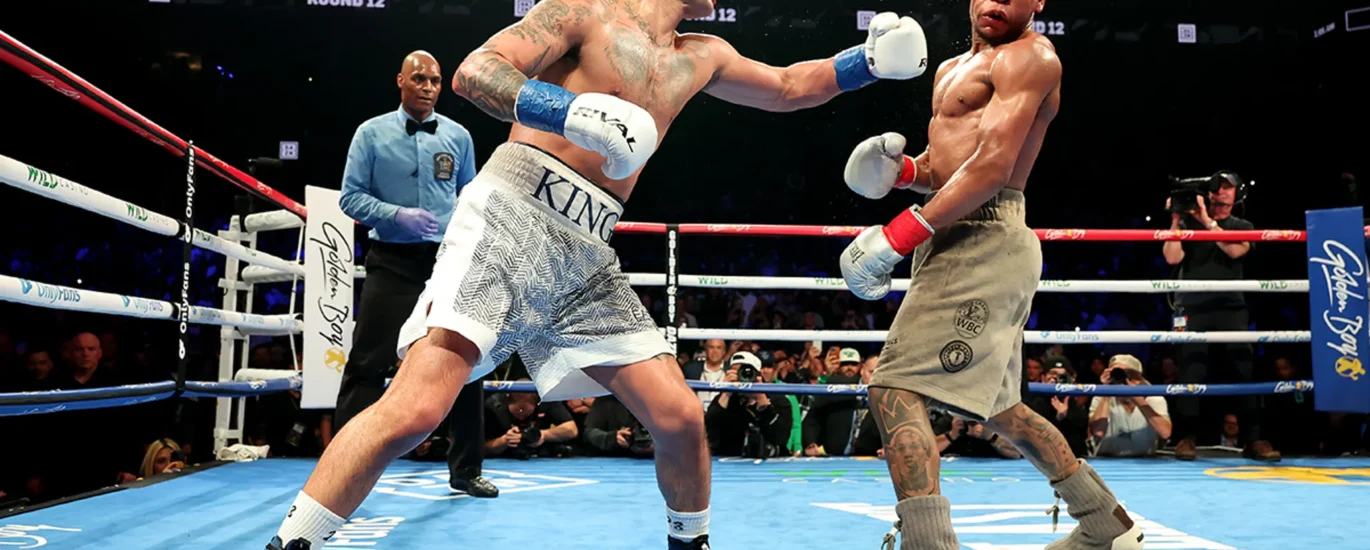
In boxing, some of the most effective punches are the ones that accomplish more than simply landing on an opponent. The **check hook** is a perfect example. It combines offense, defense, timing, and footwork into a single movement, allowing a boxer to counter an aggressive opponent while simultaneously moving out of the line of attack.
The check hook is particularly useful against opponents who constantly pressure forward. Instead of backing straight toward the ropes or getting caught in an exchange, a boxer can use the check hook to interrupt the opponent’s advance, pivot away, and create a new angle.
What Is a Check Hook?
A check hook is essentially a lead hook thrown while pivoting away from an advancing opponent. For an orthodox boxer, this usually means throwing the left hook while pivoting clockwise around the lead foot. A southpaw performs the movement in the opposite direction with the right hook.
What separates the check hook from an ordinary lead hook is the footwork.
Rather than planting your feet and trading punches, you use the hook to “check” the opponent’s forward movement while your pivot takes you away from the center of their attack.
When performed correctly, your opponent may continue moving forward while you finish the technique standing safely off to their side.
How to Throw the Check Hook
Start in your normal boxing stance with your hands up, chin tucked, and weight balanced. The technique works best when you are relaxed and ready to react rather than leaning heavily in either direction.
As your opponent steps toward you, begin throwing your lead hook. Keep the punch compact. The elbow should travel naturally behind the fist without allowing the hook to become excessively wide.
At roughly the same time, plant your lead foot and begin your pivot.
For an orthodox boxer, the left foot acts as the primary pivot point while the rear foot swings clockwise. Your body rotates away from the opponent’s forward path as the hook lands.
The sequence should feel like one coordinated movement:
**Hook → Pivot → Reset**
By the time your opponent finishes moving forward, you should already be positioned at an angle rather than directly in front of them.
Timing Is More Important Than Power
One of the biggest mistakes boxers make with the check hook is trying to turn it into a knockout punch every time.
Power can certainly be generated with the technique, but timing and positioning are usually more important.
The ideal moment to throw the check hook is when an opponent commits to moving forward. Their momentum makes it more difficult for them to suddenly stop or change direction.
Your hook disrupts their advance while your pivot removes you from their attacking line.
This means the opponent’s own forward movement can contribute to the impact of the punch.
Don’t Forget the Pivot
A lead hook without the accompanying footwork is simply a hook.
The pivot is what makes the check hook such an effective defensive counter.
Imagine an aggressive opponent charging straight down the center of the ring. If you simply throw a hook and remain in front of them, you may still be vulnerable to their punches.
Instead, throw the hook and rotate around your lead foot.
Your rear foot should move around rather than crossing behind your lead leg. Once the pivot is complete, immediately regain your boxing stance.
You should finish balanced and ready to punch, defend, or move again.
Using the Check Hook Against Pressure Fighters
Pressure fighters often try to reduce space by continuously stepping forward. Their goal is to force opponents toward the ropes or corners where movement becomes limited.
The check hook can punish this strategy.
Rather than retreating several steps every time the opponent advances, give them the impression that they are successfully closing the distance. When they commit to stepping inside, throw the check hook and pivot away.
Now the opponent has to stop, turn, locate you, and restart their attack.
Repeated successfully, this can make an aggressive boxer much more hesitant about charging forward.
Setting Up the Check Hook
You don’t always have to wait for your opponent to attack. Experienced boxers can deliberately create opportunities for the check hook.
One method is to give ground gradually.
Take a small step backward and allow your opponent to believe they can close the distance. As they increase their pressure, plant your lead foot, throw the hook, and pivot.
You can also establish the jab first. After repeatedly meeting an advancing opponent with the jab, occasionally replace it with the check hook when they attempt to rush through the distance.
Feints can also encourage an opponent to step forward at exactly the moment you want them to.
Common Check Hook Mistakes
- Making the hook too wide: A looping punch takes longer to reach the target and can leave you exposed. Keep the hook compact.
- Pivoting too early: If you move before the opponent commits, they may simply follow you. Let them step into the trap.
- Pivoting too late: Waiting too long can allow the opponent to crowd you before you have enough room to rotate.
- Crossing your feet: Your feet should never become tangled during the pivot. Maintain your stance throughout the movement.
- Leaning backward: Trying to escape by leaning away can compromise your balance. Use your feet and rotation instead.
- Admiring the punch:Whether the hook lands or misses, finish your pivot and immediately return to your defensive position.
A Simple Check Hook Drill
One of the easiest ways to practice the technique is with a partner using boxing gloves and focus mitts.
Have your partner slowly step toward you while presenting a target for the lead hook.
As they enter range:
1. Throw the lead hook.
2. Pivot around the lead foot.
3. Move the rear foot around with the rotation.
4. Reset your stance at the new angle.
5. Finish with your hands up and eyes on your partner.
Start slowly and concentrate on balance rather than speed.
Once the movement becomes natural, increase the pace and allow your partner to apply more realistic forward pressure. Eventually, the drill can be incorporated into controlled sparring so you learn to recognize the opportunity without knowing exactly when it will appear.
Adding the Check Hook to Your Boxing
The check hook demonstrates an important principle of boxing: **you don’t always have to move backward when your opponent moves forward.**
With good timing and footwork, you can attack while escaping.
A properly executed check hook allows you to land a counter, avoid the opponent’s attack, change the angle, and regain control of the exchange—all within a single sequence.
Practice the hook and pivot separately at first. Once both movements are comfortable, combine them until they become one fluid action.
Eventually, the goal is to recognize forward pressure and react instinctively:
Catch them coming in, turn the corner, and make them find you again.