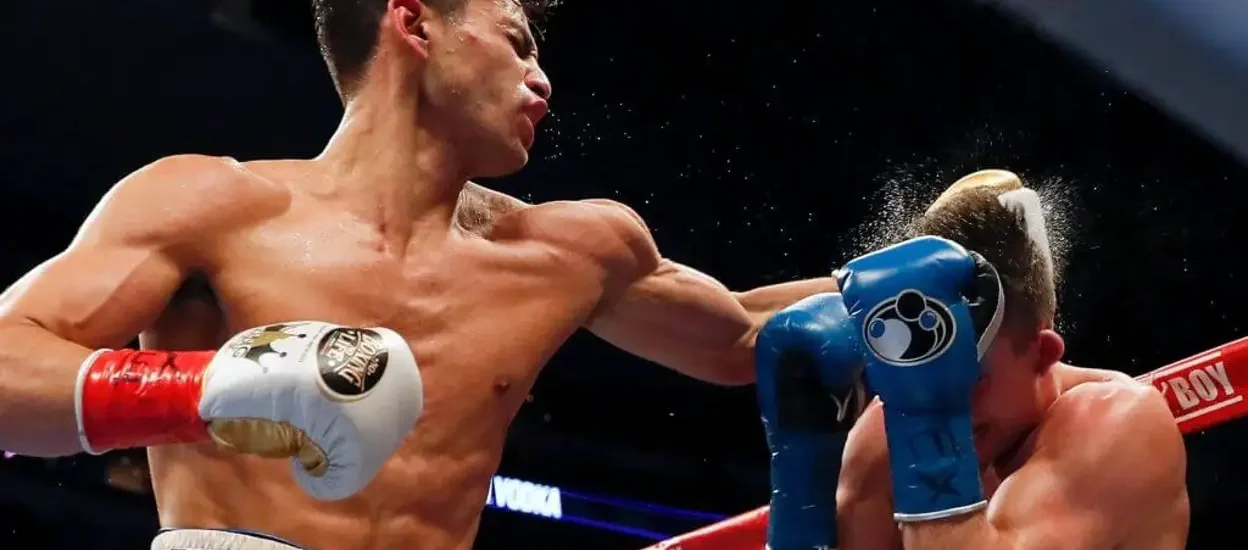
The left hook is one of boxing’s most effective punches. Short, fast, and capable of generating serious power, it can be used to attack the head or body and fits naturally into a wide range of combinations.
Unlike a straight punch, the left hook travels across the target. Its effectiveness comes from timing, rotation, positioning, and compact technique.
What Is the Left Hook?
For an orthodox boxer, the left hook is thrown with the lead hand.
Instead of traveling directly toward the target, the punch moves across the body in a curved path. It can target the opponent’s jaw, temple, ribs, or body.
Because the punch can arrive from an angle, it can be particularly useful when an opponent is protecting themselves against straight punches.
Where Does the Power Come From?
A common mistake is trying to generate all the power with the arm.
The left hook should involve the entire body.
Your legs, hips, torso, shoulder, and arm work together to create the rotation. The lead side of your body turns as you deliver the punch, allowing your body weight and rotation to contribute to the shot.
The key is coordination rather than simply throwing the arm harder.
Keep the Hook Compact
A good left hook doesn’t need a huge wind-up.
The farther your hand travels before the punch, the easier it can be for your opponent to see it coming.
Keep the movement compact and controlled. Your elbow and fist should work together as your body rotates toward the target.
The exact arm position can vary depending on distance and style, but the punch should remain structurally sound and balanced.
The Importance of Your Feet
Your feet play an important role in generating and controlling the hook.
As you throw, your lead side rotates and your lower body helps support the movement. Your feet should remain positioned so you can recover quickly after the punch.
Avoid spinning excessively or allowing your feet to become tangled.
The goal is to generate rotation without sacrificing your ability to defend or throw the next punch.
Head and Body Hooks
The left hook can be aimed at different targets.
A head hook can target the jaw or side of the head.
A body hook can target the ribs or midsection.
Changing levels can make your offense harder to predict. For example, attacking the body may cause an opponent to lower their guard, potentially creating an opening upstairs.
Setting Up the Left Hook
The hook becomes especially useful when combined with straight punches.
A jab can occupy an opponent’s attention before a hook comes around the guard. A rear straight can also create an opportunity for the lead hook as you rotate back into position.
Footwork can create another opening. Changing your angle can make it easier to attack from the side rather than directly in front of your opponent.
The key is to create a reaction before throwing the hook.
Common Left Hook Mistakes
Swinging Too Wide
A huge looping hook takes longer to reach the target and can be easier to anticipate.
Using Only the Arm
Without proper body rotation, the punch may become inefficient and difficult to recover from.
Dropping the Opposite Hand
Your rear hand should remain available for defense while you throw the hook.
Overrotating
Too much rotation can cause you to lose balance and leave yourself exposed.
Throwing From the Wrong Distance
If you’re too far away, reaching for the target can compromise your technique. Get into the appropriate range before committing to the punch.
How to Practice the Left Hook
Start with slow shadowboxing. Focus on your stance, rotation, balance, and returning your hand to the guard.
Once the movement feels natural, practice combinations such as the jab followed by the left hook. You can also work the hook on a heavy bag, concentrating on accuracy and technique rather than simply trying to hit as hard as possible.
As your skill improves, introduce movement and controlled partner drills to practice timing.
The Left Hook Is About More Than Power
The left hook is famous for its knockout potential, but power isn’t its only advantage.
It can attack around an opponent’s guard, work the body, create openings, and connect naturally with other punches.
Master the fundamentals first: stay balanced, rotate correctly, keep the punch compact, and choose the right distance.
When those elements come together, the left hook becomes one of the most versatile punches in boxing.