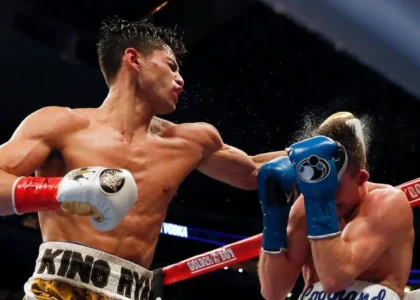
The uppercut is one of boxing’s most dangerous punches when used correctly. Traveling upward toward the body or head, it can catch an opponent at close range and create openings for combinations.
But the uppercut isn’t simply a punch you throw by swinging your arm upward. The best uppercuts come from a combination of positioning, timing, balance, and rotation.
What Is an Uppercut?
An uppercut is a short, upward punch usually thrown at close or mid-range.
It can be aimed at the opponent’s:
-
Chin
-
Body
-
Solar plexus
-
Ribs
Both the lead hand and rear hand can throw an uppercut. The rear uppercut can carry significant power, while the lead uppercut can be useful for setting up combinations and controlling close-range exchanges.
Where Does the Power Come From?
A common beginner mistake is trying to generate the entire punch with the arm.
Instead, think about the uppercut as a movement involving the legs, hips, torso, and arm working together.
As you drive upward from your legs and rotate your body, that movement transfers through your torso and into the punch. Your arm then delivers the final part of the motion.
The punch should remain compact. A huge upward swing can be slow, telegraph your intentions, and leave you exposed.
Keep It Tight
The uppercut works best when it stays close to your body.
Your elbow shouldn’t flare dramatically away from your torso. Keeping the punch compact makes it harder to see coming and allows you to recover your hand quickly.
Think about creating a short path from your guard to the target rather than making a large looping motion.
The Importance of Distance
Uppercuts are particularly useful at close range.
If you’re too far away, reaching for an uppercut can compromise your balance and leave you vulnerable. Instead, use your footwork and other punches to close the distance before looking for the opportunity.
Inside boxing is often about recognizing small openings. When an opponent’s guard separates or their head moves into range, an uppercut can exploit that opening.
Uppercuts in Combinations
An uppercut becomes even more effective when combined with other punches.
For example, a boxer might use a hook to draw an opponent’s guard to one side before throwing an uppercut through the middle. Another common idea is to alternate between body and head attacks.
The important thing isn’t memorizing one combination. It’s learning to recognize how an opponent reacts to your punches.
If they protect their body, the head may become available. If they raise their guard, openings can appear underneath.
Common Uppercut Mistakes
Swinging From Too Low
Dropping your hand dramatically before throwing the punch makes the uppercut easier to see and counter.
Overextending
If you reach too far, you can lose your balance. Keep your feet underneath you and maintain a stable base.
Using Only Your Arm
An arm-only uppercut tends to lack efficient power and can become tiring. Coordinate your lower body and torso with the punch.
Forgetting Your Defense
After throwing the uppercut, return to a position where you can defend yourself. Don’t admire the punch or leave your other hand hanging.
Throwing It at the Wrong Distance
An uppercut isn’t a magic punch that works from everywhere. Distance and positioning determine whether it’s appropriate.
Practicing the Uppercut
Start with slow shadowboxing. Focus on keeping the punch compact and returning your hand to your guard after every repetition.
Next, work on the heavy bag with controlled combinations. Concentrate on technique rather than simply trying to hit the bag as hard as possible.
Partner drills can eventually help you learn when the uppercut is available during movement and exchanges. Any partner work should be controlled and appropriate to your experience level.
The Uppercut Is About More Than Power
A powerful uppercut can be impressive, but power isn’t its only purpose.
The punch can disrupt an opponent’s guard, attack the body, create openings, and connect naturally with hooks and straight punches. The most effective uppercut is often the one your opponent doesn’t see coming.
Master the basics first: stay balanced, keep the punch compact, use your whole body, and choose the right moment.
When those pieces come together, the uppercut becomes more than a powerful punch—it becomes an important part of a complete boxing game.