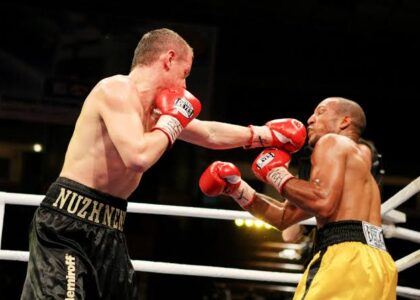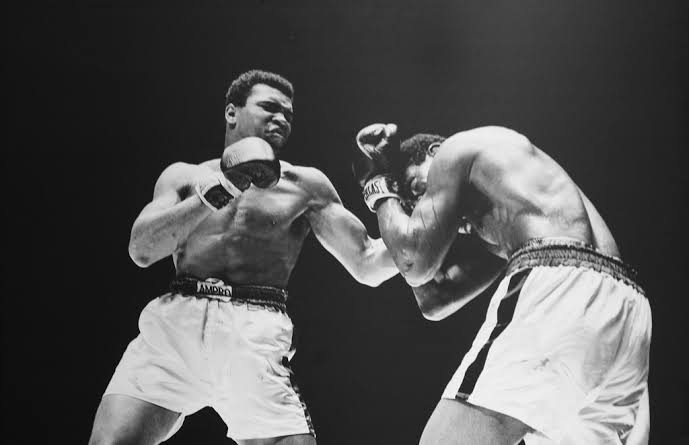
In boxing, few punches are as recognizable and exciting as the uppercut. Known for its explosive power and ability to catch opponents off guard, the uppercut is an important weapon in a boxer’s offensive arsenal.
When used with proper technique and timing, the uppercut can become an effective punch at close range. It is particularly useful when opponents move into punching distance or leave openings during exchanges.
Some of boxing’s most memorable fighters, including Mike Tyson, George Foreman, Roy Jones Jr., and Sugar Ray Leonard, demonstrated how dangerous and effective uppercuts can be.
Whether you are a beginner learning the fundamentals or an experienced boxer refining your technique, understanding the uppercut is an important part of developing a complete boxing skill set.
What Is an Uppercut in Boxing?
The uppercut is a punch that travels upward toward an opponent’s head or body.
It can be thrown with either hand:
- Lead uppercut: Thrown with the lead hand.
- Rear uppercut: Thrown with the rear hand.
Unlike the jab and cross, which travel primarily in a straight line, the uppercut follows an upward trajectory.
It is commonly used at close and mid-range distances and can be incorporated into combinations with hooks and straight punches.
Why the Uppercut Is Important
The uppercut adds another dimension to a boxer’s offense.
Here are some of its biggest advantages:
1. Adds Variety to Your Offense
A boxer who can throw straight punches, hooks, and uppercuts becomes less predictable.
2. Useful at Close Range
The uppercut is an important punch when opponents get close and traditional long-range punches become less practical.
3. Creates Combination Opportunities
Uppercuts can be incorporated into combinations with hooks and straight punches.
4. Challenges an Opponent’s Defense
Because the uppercut travels along a different path than a straight punch, it adds variety to offensive attacks.
5. Develops Coordination
Learning the uppercut helps boxers improve their coordination, balance, and understanding of punching mechanics.
Different Types of Uppercuts in Boxing
1. Lead Uppercut
<AsyncImage query=”boxing fighter demonstrating lead hand uppercut boxing technique” aspectRatio=”16:9″ width=”100%”/>
The lead uppercut is thrown with the hand closest to the opponent.
For an orthodox boxer, this is the left hand. For a southpaw, it is the right hand.
It is commonly used as a shorter punch and can be incorporated into combinations.
2. Rear Uppercut
<AsyncImage query=”professional boxer throwing right rear hand uppercut boxing” aspectRatio=”16:9″ width=”100%”/>
The rear uppercut is thrown with the back hand.
For an orthodox boxer, this is the right hand. For a southpaw, it is the left hand.
It is an important power-punch variation and requires good coordination and balance.
3. Body Uppercut
<AsyncImage query=”boxing body uppercut heavy bag training” aspectRatio=”16:9″ width=”100%”/>
The body uppercut is directed toward an opponent’s torso.
It provides another option for attacking the body and can be combined with hooks and other punches.
4. Short Uppercut
The short uppercut is a compact variation commonly associated with inside fighting.
Rather than requiring a large movement, it uses a shorter punching motion.
It is particularly relevant when fighters are operating in close quarters.
Famous Boxers Known for Their Uppercuts
Throughout boxing history, several fighters have demonstrated the effectiveness of the uppercut.
Mike Tyson
<AsyncImage query=”Mike Tyson boxing uppercut fight action photograph” aspectRatio=”16:9″ width=”100%”/>
Mike Tyson became famous for his explosive combinations and aggressive fighting style.
His uppercuts were an important part of his offense, particularly when fighting at close range.
Tyson demonstrated how uppercuts could be incorporated into combinations alongside hooks and other punches.
George Foreman
<AsyncImage query=”George Foreman heavyweight boxing fight action” aspectRatio=”16:9″ width=”100%”/>
George Foreman was known for his tremendous punching power and physical strength.
His ability to generate powerful punches from different angles made him one of the most intimidating heavyweight fighters in boxing history.
Roy Jones Jr.
<AsyncImage query=”Roy Jones Jr boxing uppercut fight action” aspectRatio=”16:9″ width=”100%”/>
Roy Jones Jr. possessed extraordinary speed, reflexes, and athletic ability.
His unpredictable fighting style allowed him to incorporate unusual punches and combinations, including uppercuts.
Sugar Ray Leonard
<AsyncImage query=”Sugar Ray Leonard boxing inside fighting action” aspectRatio=”16:9″ width=”100%”/>
Sugar Ray Leonard was known for his combinations, speed, and adaptability.
He demonstrated how uppercuts could become part of a complete offensive system rather than being used as isolated power punches.
Common Mistakes Beginners Make When Throwing Uppercuts
The uppercut requires coordination and control. Beginners should watch out for these common mistakes:
- Dropping the guard: Avoid leaving your head exposed while punching.
- Overexaggerating the movement: Large, unnecessary movements can make punches easier to anticipate.
- Losing balance: Maintain a stable boxing stance.
- Using only the arm: Proper punching mechanics involve coordinated movement throughout the body.
- Throwing from too far away: Uppercuts are generally most practical at close and mid-range.
- Forgetting defense: Always maintain defensive awareness when throwing combinations.
Developing proper technique is more important than trying to generate maximum power.
How to Improve Your Uppercut
Improving your uppercut takes repetition, patience, and good coaching.
Here are some useful training methods:
1. Shadowboxing
Practice incorporating lead and rear uppercuts into your shadowboxing routine while maintaining balance and defensive positioning.
2. Heavy Bag Training
Use controlled punching combinations to develop coordination and consistency.
3. Focus Mitt Training
Work with a qualified boxing coach to improve timing, accuracy, and punching mechanics.
4. Combination Drills
Practice incorporating uppercuts into combinations alongside jabs and hooks.
5. Strength and Conditioning
Develop overall strength, coordination, and cardiovascular fitness to support your boxing performance.
Always practice with appropriate equipment and supervision, especially when learning new techniques.
Uppercut vs. Hook: What’s the Difference?
Both punches are important parts of boxing, but they travel along different paths.
| Uppercut | Hook |
|---|---|
| Travels upward | Travels across in an arc |
| Can target the head or body | Can target the head or body |
| Commonly associated with close-range exchanges | Used at close and mid-range |
| Adds vertical variation to combinations | Adds horizontal variation to combinations |
Understanding the difference helps boxers develop a more complete offensive skill set.
Boxing Combinations That Include the Uppercut
Once you become comfortable with the basic uppercut, you can begin incorporating it into combinations.
Some common examples include:
- Jab – Cross – Lead Uppercut
- Lead Hook – Rear Uppercut
- Jab – Rear Uppercut – Lead Hook
- Lead Uppercut – Rear Cross
- Body Hook – Uppercut – Hook
Practice these combinations slowly with a qualified coach before increasing speed or intensity.
Final Thoughts
The uppercut is one of boxing’s most exciting and valuable punches. It adds variety to a fighter’s offense and provides another option when competing at close range.
From Mike Tyson’s explosive combinations to Roy Jones Jr.’s unpredictable style, boxing history has demonstrated the importance of mastering different punches.
However, throwing a great uppercut requires more than power. It requires timing, coordination, balance, technique, and defensive awareness.
Remember: A complete boxer must understand every punch in the sport, not just the ones that look impressive.
Master the fundamentals, practice consistently, and continue developing your boxing skills one punch at a time.