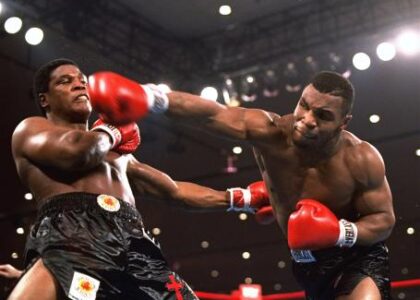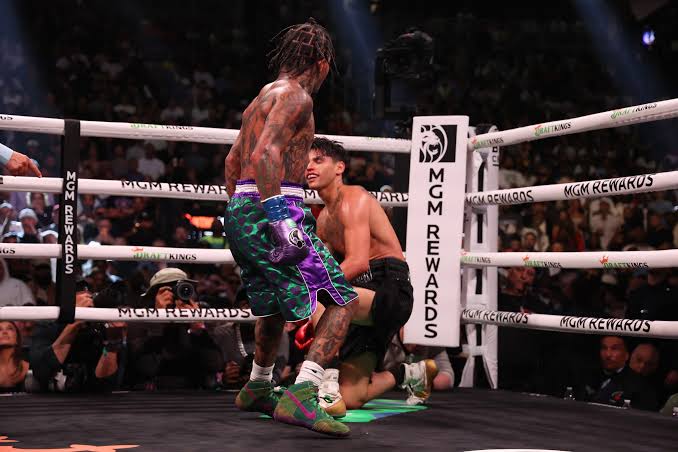
Some opponents constantly move forward. They pressure you, throw combinations, and try to force you backward toward the ropes. Against this type of fighter, simply retreating may eventually leave you with nowhere to go.
That’s where the check hook can become an effective tool.
A check hook combines a hook with an angle change. Instead of standing directly in front of an advancing opponent and trading punches, the boxer throws the hook while pivoting away from the opponent’s forward movement.
When performed correctly, you aren’t just landing a counter—you are also changing your position.
What Is a Check Hook?
A check hook is generally a lead hook thrown while pivoting away from an opponent who is coming forward.
For an orthodox boxer, this usually means throwing the left hook while pivoting and moving off the opponent’s line of attack. A southpaw typically performs the technique with the right lead hook and pivots in the opposite direction.
The basic idea is simple:
Your opponent comes forward → you throw the hook → you pivot away → your opponent continues past your previous position.
Instead of meeting pressure with pressure, you’re using your opponent’s forward momentum against them.
Why Is the Check Hook Effective?
Aggressive fighters often expect their opponents to move straight backward.
That can make their pressure easier.
If you continually retreat in a straight line, an experienced pressure fighter can follow you until you reach the ropes or a corner.
The check hook changes that equation.
Instead of moving backward, you create an angle.
Now the opponent has to stop, turn, locate you, and reset before continuing the attack.
That brief moment can give you an opportunity to counter again, move away, or take control of the center of the ring.
Timing Is Everything
A check hook isn’t simply a regular hook followed by a pivot.
The technique depends heavily on timing.
Throw too early and your opponent may still be outside punching range.
Throw too late and the opponent may already be close enough to smother your hook or land punches of their own.
Ideally, the hook arrives as the opponent commits to moving into range.
You’re trying to catch the opponent during their forward movement while simultaneously removing yourself from the position they intended to attack.
This is why the check hook becomes much more effective when you learn to recognize an opponent’s rhythm.
How to Throw a Check Hook
Start in your normal boxing stance.
As your opponent begins closing distance, stay balanced and avoid leaning backward.
For an orthodox fighter:
Step 1: Stay composed.
Don’t immediately retreat when your opponent approaches.
Step 2: Throw the lead left hook.
Keep the punch compact rather than making a large swinging motion.
Step 3: Pivot on the lead foot.
Allow your body to rotate as the hook travels.
Step 4: Bring the rear foot around.
Your rear foot should reposition naturally as you complete the turn.
Step 5: Reset your stance.
Finish balanced, with your hands ready to punch or defend.
The punch and pivot should eventually feel like one coordinated movement.
Don’t Make the Hook Too Wide
One of the most common mistakes is loading up on the check hook.
A huge swinging hook takes longer to reach the target and can pull you off balance.
Remember that your opponent is already moving toward you.
You don’t necessarily need to generate maximum power.
A short, sharp hook combined with your opponent’s forward momentum can be effective while allowing you to complete the pivot quickly.
Think:
Compact punch. Quick pivot. Balanced finish.
Don’t Cross Your Feet
Foot placement is critical.
The purpose of the check hook is to escape pressure while remaining in position to continue boxing.
If your feet cross during the pivot, you can temporarily lose your balance and ability to punch.
Practice the movement slowly before worrying about speed.
After every repetition, ask yourself:
Am I balanced?
If you can’t immediately throw another punch or defend yourself, your footwork probably needs adjustment.
Use the Opponent’s Momentum
One of the most interesting aspects of the check hook is that an aggressive opponent helps create the opportunity.
Imagine an opponent charging forward expecting you to retreat.
Instead, you remain composed.
As they step into range, you throw the hook and pivot.
Suddenly you’re standing at an angle while the opponent is moving toward the space you just occupied.
Their aggression created the opening.
This is an important boxing principle:
You don’t always have to stop pressure. Sometimes you can redirect it.
Floyd Mayweather vs. Ricky Hatton
One of the most famous examples of the check hook came during the 2007 fight between Floyd Mayweather Jr. and Ricky Hatton.
Hatton spent much of the fight aggressively pursuing Mayweather.
In the tenth round, Hatton rushed forward near the corner. Mayweather caught him with a beautifully timed left check hook while pivoting away.
Hatton’s forward momentum carried him into the corner, and he went down.
The sequence became one of the most recognizable examples of the technique because it demonstrated exactly what makes a check hook effective: timing, positioning, accuracy, and the opponent’s own momentum working together.
Practice the Check Hook With a Heavy Bag
A heavy bag can help beginners learn the punch and pivot.
Stand in front of the bag in your normal stance.
Throw your lead hook and immediately pivot.
After the pivot, you should find yourself facing the bag from a new angle.
Don’t rush back into another combination.
First check your position.
Are you balanced?
Are your hands up?
Are your feet properly positioned?
Once the movement becomes comfortable, add another punch after the pivot.
For example:
Check Hook → Pivot → Cross
or
Check Hook → Pivot → Jab-Cross
This teaches you to attack again from your new position.
Practice It on the Mitts
Focus mitts allow a trainer to make the drill more realistic.
The trainer can gradually move toward the boxer while presenting the target for the lead hook.
The boxer throws the check hook, pivots, and resets.
As the fighter improves, the trainer can increase the pressure and make the timing less predictable.
Eventually, the boxer should react to the trainer’s movement rather than knowing exactly when the attack is coming.
That’s where the drill begins developing real timing.
Add It to Shadowboxing
Shadowboxing is another excellent way to practice the check hook.
Visualize an opponent aggressively closing distance.
Instead of automatically moving backward, hold your position for a moment.
Throw the hook.
Pivot.
Then immediately imagine where your opponent would be.
Continue boxing from your new angle.
For example:
Jab → Opponent pressures → Check Hook → Pivot → Cross
Shadowboxing this way turns the exercise into more than simply throwing punches into the air. You’re practicing decision-making and positioning.
Don’t Use It Every Time
Like any counterpunch, the check hook becomes less effective when it becomes predictable.
If you attempt the same movement every time an opponent comes forward, they may begin anticipating your pivot.
Good boxing requires variety.
Sometimes jab and move.
Sometimes step back.
Sometimes pivot without punching.
Sometimes clinch when appropriate.
And sometimes plant your feet long enough to catch the opponent with the check hook.
The opponent shouldn’t know which response is coming.
Punch, Pivot, Reposition
The check hook demonstrates an important concept that every boxer should understand:
Defense doesn’t always mean moving backward.
Sometimes the safest place is beside your opponent rather than directly in front of them.
A well-executed check hook allows you to counter, create an angle, and escape pressure in one fluid sequence.
But the punch itself is only half of the technique.
The real skill is what happens afterward.
Stay balanced. Find your opponent. Reset your stance. Be ready to attack again.
Because the goal of a good check hook isn’t simply to land a punch.
It’s to land the punch and leave your opponent facing the wrong direction.