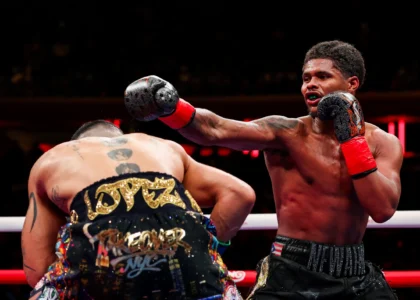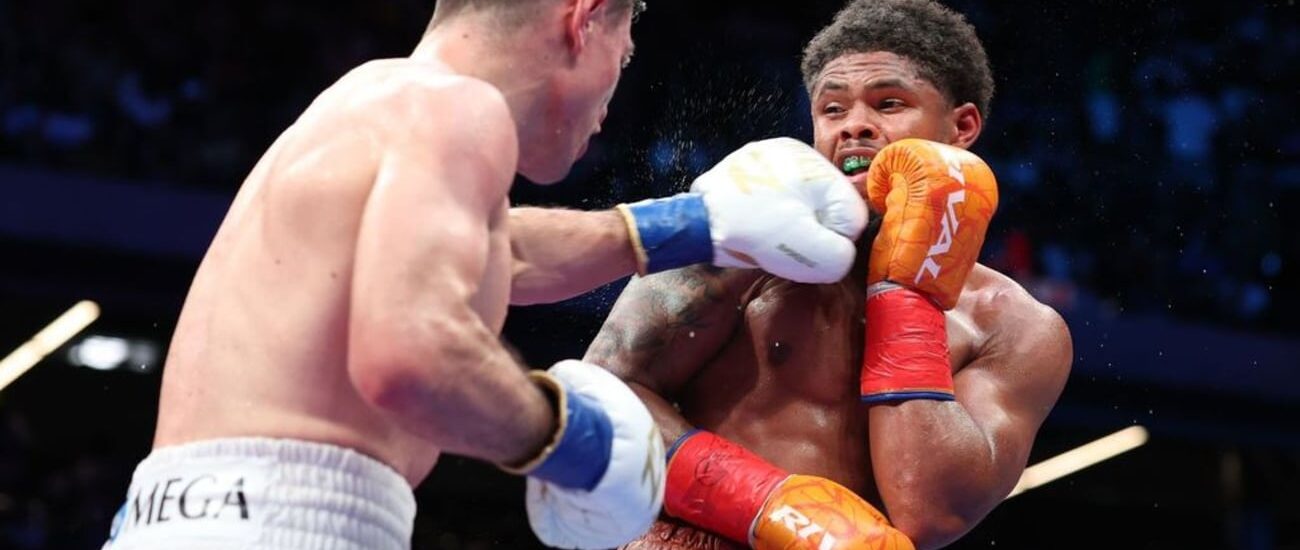
Learning how to punch is only half of boxing. The other half is learning how not to get punched.
Great defense isn’t simply covering your face and waiting for an opponent to finish attacking. Effective boxing defense allows you to avoid or reduce the impact of punches while maintaining your balance, controlling distance, and creating opportunities to counter.
A complete defensive boxer learns how to block, parry, slip, roll, use footwork, control distance, and counter.
The goal isn’t just to survive an opponent’s offense.
It’s to make their offense work against them.
Start With Your Boxing Stance
Good defense begins with a good stance.
Before learning advanced head movement or complicated defensive techniques, you need a position that allows you to react quickly.
Keep your knees slightly bent, chin tucked, hands ready, and weight balanced.
Avoid standing too tall or placing all your weight on one leg.
You should be able to move forward, backward, or sideways without having to completely reset your feet.
A balanced fighter is much harder to hit cleanly.
Keep Your Chin Protected
The chin is one of the most important targets to protect.
Keep it slightly tucked rather than lifting your head when punching or moving.
Your shoulders and gloves can provide additional protection.
A common beginner mistake is allowing the chin to rise during combinations.
Practice maintaining the same defensive posture whether you’re attacking or defending.
Keep Your Hands Up
Your guard is your first layer of protection.
Keeping your hands in position allows you to block or catch punches that get through your other defenses.
But keeping your hands up doesn’t mean becoming stiff.
Stay relaxed.
Tension slows your reactions and can make movement more difficult.
Your guard should feel ready—not frozen.
Block the Punch
Blocking is one of the simplest defensive techniques.
Instead of moving away from the punch, you use your gloves and arms to absorb or redirect some of its force.
Against straight punches, you can use a tight guard to protect your head.
Against hooks, the glove and forearm can help shield the side of your face.
Against body shots, the elbows can help protect the ribs and torso.
Blocking is particularly useful when there isn’t enough time or space to completely avoid the punch.
Catch the Jab
A jab can often be caught with the rear hand.
Instead of making a huge movement, use a small motion to receive or redirect the punch.
Don’t reach dramatically toward the opponent.
Large defensive movements can create openings.
Keep the catch compact and return the hand immediately to position.
From there, you may have an opportunity to counter.
Parry Straight Punches
A parry uses a small hand movement to redirect an incoming straight punch away from its target.
The key word is small.
Don’t slap wildly at punches.
A slight redirection may be enough to move the glove away from your face.
Parrying can also create counterpunching opportunities because the opponent’s arm is extended while you’re still in position to attack.
Slip the Punch
Slipping moves your head away from the path of a straight punch.
Instead of moving backward, you move slightly off the centerline.
The punch passes beside your head.
A good slip is small.
You don’t need to move several feet.
Move only enough for the punch to miss.
Then counter.
For example:
Opponent Jabs → Slip → Cross
Now your defense has immediately become offense.
Roll Under Hooks
Hooks travel from the side, which makes rolling underneath them an important defensive skill.
Bend through your knees and move underneath the path of the punch.
Avoid bending dramatically at the waist.
Keep your eyes on the opponent and your hands up.
Come back into a balanced position.
Then counter.
For example:
Opponent Hooks → Roll → Left Hook
or:
Opponent Hooks → Roll → Cross
The defensive movement can help load your body for the punch coming back.
Use Your Feet
One of the best ways to avoid a punch is simply not being where the punch lands.
Footwork controls distance.
You can step backward.
Move laterally.
Circle.
Pivot.
Change angles.
The important thing is maintaining your stance while moving.
Don’t cross your feet unnecessarily or allow them to come together.
Your feet should keep you balanced enough to attack or defend at any moment.
Don’t Always Move Straight Back
Moving backward can be useful, but constantly retreating in a straight line creates problems.
Eventually, you may reach the ropes.
Instead, learn to move sideways and create angles.
If an opponent pressures forward:
Step Back → Pivot
or:
Jab → Move Laterally
or:
Check Hook → Pivot
Now you’re escaping pressure without simply giving up ground.
Control Distance
Distance itself is a form of defense.
If you’re outside the opponent’s punching range, many attacks cannot reach you.
If you’re inside the correct range for your own punches, you can attack and then reposition before the opponent responds.
The jab is especially useful for controlling distance.
Use it to keep an opponent occupied while you establish where you want the exchange to happen.
Use the Jab Defensively
The jab isn’t only an offensive weapon.
An aggressive opponent may have difficulty moving forward if they’re constantly running into your jab.
Try:
Jab → Step Back
or:
Double Jab → Pivot
You’re using offense to support your defense.
Sometimes preventing an opponent from beginning their attack is better than defending the combination after it starts.
Use Feints to Read Your Opponent
Defense also