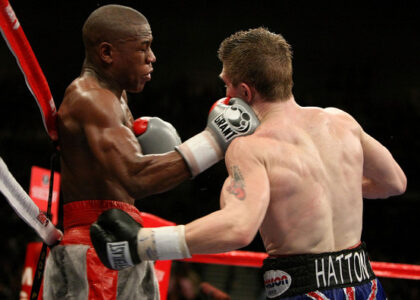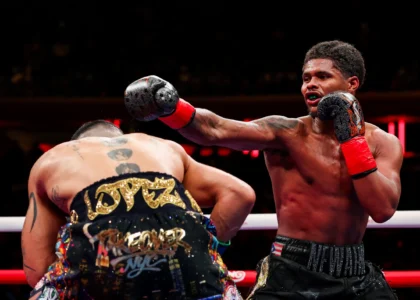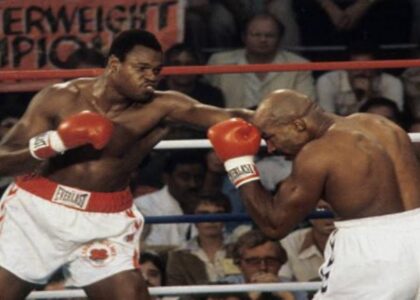
Powerful punches don’t begin with your arms. They begin from the ground and travel through your legs, hips, torso, shoulders, and finally into your fists. One of the most important links in that chain is hip rotation.
Learning how to properly rotate your hips can make your punches faster and more powerful without requiring you to swing harder. It can also improve your balance, combinations, defense, and overall boxing technique.
Why Hip Rotation Matters in Boxing
A common mistake among beginners is trying to generate punching power primarily with the arms. While the arms certainly contribute to a punch, relying on them alone limits both speed and power.
Proper punching mechanics use the entire body.
When you throw a punch, force is generated against the floor and transferred upward through your legs. Your hips rotate, your torso follows, your shoulder turns, and your arm delivers the punch.
Think of the movement as a chain:
Feet → Legs → Hips → Torso → Shoulder → Arm → Fist
If your hips don’t rotate properly, you break an important link in that chain.
Hip Rotation and the Cross
The rear-hand cross is one of the easiest punches for understanding hip rotation.
As you throw your rear hand, your rear foot pivots and your rear hip rotates toward your opponent. Your torso and shoulder rotate with the movement as your fist travels toward the target.
The goal isn’t to twist your hips as far as possible. You want a quick, controlled rotation while maintaining your balance and stance.
Your rear heel will typically turn outward as you pivot on the ball of the foot. This allows the leg and hip to rotate naturally.
Instead of reaching toward your opponent with your arm, you’re driving the punch with your entire body.
Hip Rotation and the Hook
Hip rotation becomes even more noticeable when throwing hooks.
Consider the lead hook.
Rather than swinging your arm around your body, rotate your hips and torso while keeping the arm relatively compact. Your lead foot can pivot with the movement, allowing the knee and hip to rotate together.
The arm essentially travels with the rotating body.
This produces a shorter, tighter, and potentially much more powerful hook than simply swinging the arm.
The same principle applies to the rear hook. Your hip, torso, shoulder, and arm should work together rather than independently.
Don’t Over-Rotate
More rotation doesn’t automatically mean more power.
Over-rotating can leave you off balance and vulnerable to counters. It can also make it difficult to throw the next punch in your combination.
Good hip rotation is explosive but controlled.
After delivering the punch, you should remain in a position where you can immediately:
- Throw another punch
- Move your feet
- Slip or roll
- Block or parry
- Counter
- Exit at an angle
Boxing isn’t about generating maximum power on every punch. It’s about producing effective power while maintaining position and control.
Your Feet and Hips Work Together
You can’t properly rotate your hips if your feet aren’t cooperating.
The feet provide the foundation for rotation. When throwing power punches, the appropriate foot pivots to allow the knee and hip to turn naturally.
Trying to rotate your hips while keeping your feet completely planted can restrict movement and place unnecessary stress on your knees.
This is why coaches constantly emphasize footwork.
Your feet don’t simply move you around the ring. They also help create the mechanics behind your punches.
Hip Rotation Makes Combinations Flow
Proper rotation becomes especially important when throwing combinations because one rotation can help set up the next.
Consider a basic:
Jab → Cross → Lead Hook
The cross rotates your body in one direction. Instead of stopping completely, you can use that position to help load the lead side for the hook.
You then rotate back through the hook.
This creates a rhythmic transfer of weight and rotation rather than three disconnected arm movements.
As combinations become more advanced, learning to control this rotational rhythm becomes increasingly important.
Hip Rotation Isn’t Only for Offense
The hips also play an important role in boxing defense.
Slips, rolls, pivots, counters, and changes of angle all involve coordinated movement through the hips and torso.
For example, after slipping a punch, your body may already be positioned to rotate into a counter.
A boxer who understands hip movement can smoothly transition from defense into offense.
Instead of thinking about punching and defense as completely separate skills, you begin connecting movements together.
Drills for Improving Hip Rotation
Shadowboxing is one of the best places to practice. Slow everything down and concentrate on the sequence of your movements. Pay attention to how your feet, knees, hips, shoulders, and hands work together.
The heavy bag is another excellent tool. Instead of trying to hit the bag as hard as possible, focus on clean technique. Listen to the sound of your punches and notice whether your body remains balanced after impact.
You can also practice rotation without punching. Get into your boxing stance, pivot your feet, and rotate your hips from side to side while keeping your stance controlled. Once the movement becomes natural, add punches.
Resistance bands and rotational strength exercises can also help develop the muscles involved, but strength training should complement proper boxing mechanics—not replace them.
Relaxation Creates Speed
One of the secrets to effective hip rotation is staying relaxed.
If your entire body is tense before you punch, your movements tend to become slower and more mechanical.
Stay loose, initiate the movement, rotate quickly, and tighten appropriately around impact.
This combination of relaxation and explosiveness helps produce speed.
And in boxing, speed combined with proper mechanics can create tremendous power.
Technique Before Power
Don’t chase knockout power when learning hip rotation.
Start slowly.
Develop the correct movement pattern first. Once your feet, hips, torso, shoulders, and hands begin working together naturally, speed and power can be added.
A boxer with efficient mechanics can often generate surprising power without appearing to throw especially hard.
That’s because the entire body is contributing to the punch.
Turn Your Hips, Not Just Your Hands
Whether you’re throwing a cross, hook, uppercut, or combination, your hands are only the final part of the movement.
The real work happens underneath them.
Learn to use your feet. Rotate your hips. Turn your torso. Let your shoulders and hands follow.
Once you understand how to connect these movements, your punches can become faster, sharper, and more powerful—and you’ll be in a much better position to throw the next punch or defend the counter.
In boxing, power isn’t just about how hard you swing. It’s about how efficiently you move your entire body.