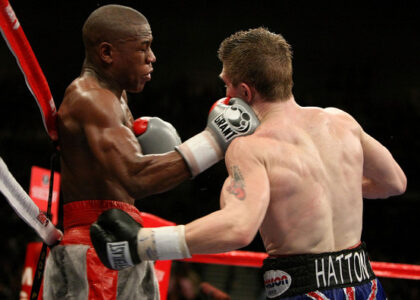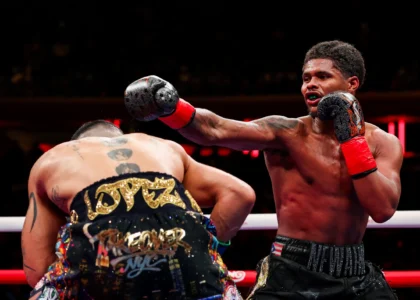
The uppercut is one of boxing’s most devastating punches. When thrown with proper technique and timing, it can break through an opponent’s guard, stop forward pressure, and even end a fight with a single shot.
Despite its power, the uppercut is often misunderstood. Many beginners try to generate force by swinging wildly or dropping their hands, making the punch slow, predictable, and easy to counter.
Learning to throw an effective uppercut is about precision, balance, and smart timing—not brute strength.
What Is an Uppercut?
An uppercut is a vertical punch that travels upward toward an opponent’s chin, jaw, or body. Unlike straight punches, which move directly forward, the uppercut rises from below, making it especially effective against opponents who lean forward or keep a high guard.
Both the lead and rear hand can throw an uppercut, and each has its own purpose.
- Lead Uppercut: Faster, shorter, and excellent for creating openings or starting combinations.
- Rear Uppercut: More powerful and often used as a fight-changing punch when the opportunity presents itself.
Knowing when to use each version is just as important as learning the mechanics.
The Fundamentals of a Proper Uppercut
A good uppercut begins with your stance.
Keep your feet shoulder-width apart, knees slightly bent, and your weight evenly distributed. Your hands should stay high, protecting your chin while remaining ready to punch.
As you throw the uppercut:
- Bend your knees slightly to load your legs.
- Rotate your hips and shoulders upward.
- Drive through your legs instead of lifting with your arm.
- Keep your elbow close to your body.
- Turn your palm toward yourself or slightly inward at impact.
- Return immediately to your guard after the punch.
The power comes from your legs and hips, with your arm acting as the final link in the chain.
When Should You Throw an Uppercut?
The uppercut is most effective when an opponent leaves space down the middle.
Common opportunities include:
Against a Leaning Opponent
If your opponent ducks forward or bends at the waist, the uppercut becomes a natural counter. Their forward movement often increases the impact of the punch.
During Close-Range Exchanges
Inside fighting is where uppercuts shine. When straight punches have little room to travel, short uppercuts can slip through openings that other punches cannot.
After Drawing the Guard High
Repeated jabs and hooks to the head often encourage an opponent to raise their guard. This creates openings for uppercuts to the body or through the center.
As Part of a Combination
Uppercuts are rarely thrown in isolation. They work best when combined with jabs, crosses, and hooks to create unpredictable attacks.
Effective Uppercut Combinations
Rather than hunting for a single knockout punch, focus on integrating uppercuts into combinations.
Some effective sequences include:
- Jab → Rear Uppercut → Lead Hook
- Double Jab → Rear Uppercut → Cross
- Lead Hook → Rear Uppercut → Lead Hook
- Slip Outside → Lead Uppercut → Cross
- Jab to the Body → Rear Uppercut to the Head
Smooth transitions between punches make the uppercut much harder to anticipate.
Drills to Improve Your Uppercut
Shadowboxing
Dedicate rounds to practicing uppercuts with proper form. Visualize an opponent in front of you and focus on balance rather than power.
Heavy Bag Work
Throw short, compact uppercuts while staying close to the bag. Avoid swinging from long range.
Concentrate on driving with your legs and rotating your hips instead of lifting with your arm.
Uppercut Bag
An uppercut bag is specifically designed to help boxers develop the correct punching angle and improve accuracy.
Practice alternating between lead and rear uppercuts while maintaining your stance.
Focus Mitts
Mitt work allows you to develop timing and accuracy with a moving target.
Have your coach mix uppercuts into realistic combinations rather than calling them out individually.
Slip Rope Drill
Move under a slip rope and throw an uppercut as you come up on the opposite side.
This teaches you to combine defensive movement with offensive attacks.
Common Uppercut Mistakes
Even experienced fighters occasionally make technical errors.
Watch out for these common mistakes:
Dropping Your Hands
Lowering your guard before throwing an uppercut exposes your chin.
Keep your opposite hand high throughout the punch.
Swinging Too Wide
An uppercut should travel on a compact path.
Wide punches take longer to reach the target and are easier to counter.
Overcommitting
Trying to throw every uppercut with maximum force often causes you to lose balance.
Stay controlled and let good technique generate the power.
Throwing From Too Far Away
Uppercuts are close-range weapons.
Attempting them from long distance usually leaves you off balance and vulnerable to straight punches.
Forgetting Defense
Many boxers admire their work after landing a good uppercut instead of preparing for the next exchange.
Always return your hands to your guard and be ready to defend or continue the combination.
Power Comes From Timing
The most effective uppercuts aren’t necessarily the hardest.
A well-timed uppercut thrown as an opponent steps forward can feel far more powerful than one delivered with maximum effort against a stationary target.
Patience and timing often matter more than raw strength.
Final Thoughts
The uppercut is one of boxing’s most exciting punches, but it’s also one of the easiest to misuse. Focus on clean mechanics, balanced footwork, and smart timing before worrying about knockout power.
Practice the fundamentals, build the punch into your combinations, and learn to recognize the right moments to throw it. Over time, the uppercut will become a reliable weapon that can change the course of a fight in an instant.
Remember, the best uppercuts aren’t thrown often—they’re thrown at exactly the right moment.