Boxing is one of the most demanding sports in the world. It requires a unique combination of strength, endurance, speed, agility, coordination, and mental toughness. Whether you’re training to compete, improve your fitness, or learn self-defense, incorporating boxing exercises into your routine can help you achieve exceptional results.
In this article, we’ll explore some of the most effective boxing training exercises that can help elevate your performance inside and outside the ring.
1. Jump Rope for Footwork and Endurance
Jumping rope is a staple in every boxer’s training program. It develops cardiovascular endurance, coordination, rhythm, and quick footwork.
### Benefits:
* Improves stamina
* Enhances balance and agility
* Strengthens calves and lower legs
* Boosts coordination
### How to Perform:
Start with 3 rounds of 2–3 minutes, maintaining a steady pace. As your fitness improves, incorporate double-unders, side-to-side movements, and high-knee variations.
## 2. Shadow Boxing for Technique
Shadow boxing allows fighters to practice punches, defensive movements, and footwork without a partner or equipment.
### Benefits:
* Refines technique
* Improves movement and balance
* Builds muscle memory
* Increases cardiovascular fitness
### How to Perform:
Spend 3–5 rounds visualizing an opponent. Focus on proper form, combinations, head movement, and defensive maneuvers.
## 3. Heavy Bag Work for Power
The heavy bag is essential for developing punching power, endurance, and accuracy.
### Benefits:
* Builds punching strength
* Improves conditioning
* Enhances combination execution
* Strengthens shoulders and core
### How to Perform:
Work in timed rounds, throwing combinations while maintaining movement. Alternate between power rounds and speed rounds for balanced development.
## 4. Speed Bag Training for Hand-Eye Coordination
The speed bag improves timing, rhythm, and upper-body endurance.
### Benefits:
* Enhances hand-eye coordination
* Develops shoulder endurance
* Improves punching rhythm
* Sharpens reflexes
### How to Perform:
Begin with short intervals focusing on consistency. Gradually increase speed while maintaining control.
## 5. Push-Ups for Upper Body Strength
Push-ups are a simple yet highly effective exercise for building boxing-specific strength.
### Benefits:
* Strengthens chest, shoulders, and triceps
* Improves punching endurance
* Requires no equipment
### Variations:
* Standard push-ups
* Diamond push-ups
* Explosive clap push-ups
* Decline push-ups
Aim for 3–4 sets of 15–25 repetitions.
## 6. Medicine Ball Slams for Explosive Power
Punching power originates from the entire body, not just the arms. Medicine ball slams help develop explosive force through the core and upper body.
### Benefits:
* Builds explosive strength
* Strengthens core muscles
* Improves athletic performance
### How to Perform:
Raise the ball overhead and slam it forcefully to the ground. Complete 3 sets of 10–15 repetitions.
## 7. Sprint Intervals for Fight Conditioning
Boxing rounds involve repeated bursts of high-intensity effort. Sprint training mimics this demand effectively.
### Benefits:
* Improves cardiovascular fitness
* Increases explosive speed
* Enhances recovery between rounds
### Sample Workout:
* Sprint 30 seconds
* Walk 60 seconds
* Repeat for 10 rounds
## 8. Core Training for Stability and Power
A strong core is critical for generating force, maintaining balance, and absorbing punches.
### Recommended Exercises:
* Planks
* Russian twists
* Bicycle crunches
* Leg raises
* Mountain climbers
Train your core 3–4 times per week for optimal results.
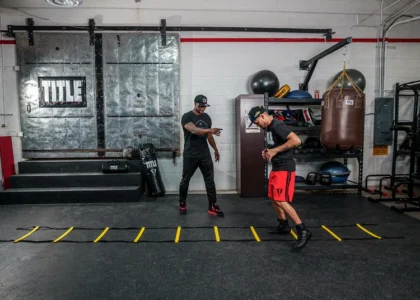
## 9. Agility Ladder Drills
Fast feet can be the difference between landing a punch and getting hit. Agility drills improve movement efficiency and reaction time.
### Benefits:
* Improves foot speed
* Enhances coordination
* Develops balance and agility
Practice various ladder patterns for 10–15 minutes at the start of training sessions.
## 10. Sparring for Real-World Application
While fitness exercises are important, sparring provides the closest experience to an actual boxing match.
### Benefits:
* Develops timing and distance management
* Improves defensive skills
* Tests conditioning under pressure
* Builds confidence
Always spar under proper supervision and with appropriate protective equipment.
## Sample Boxing Workout Routine
### Warm-Up
* Jump Rope: 5 minutes
* Dynamic Stretching: 5 minutes
### Main Workout
* Shadow Boxing: 3 rounds
* Heavy Bag: 4 rounds
* Push-Ups: 3 sets of 20
* Medicine Ball Slams: 3 sets of 12
* Sprint Intervals: 10 rounds
### Cool Down
* Light Jog: 5 minutes
* Stretching: 10 minutes
## Final Thoughts
Boxing training is much more than throwing punches. A complete program combines technical skill work, strength training, conditioning, agility, and recovery. By consistently practicing these boxing exercises, you’ll develop the power, endurance, and athleticism needed to perform at your best.
Whether you’re a beginner or an experienced fighter, these training methods can help you build a stronger body, sharper skills, and greater confidence both inside and outside the ring.