In boxing, not every great punch is about raw power. Some of the most effective shots are about timing, balance, and intelligence. Few punches capture that idea better than the check hook—a deceptively simple move that can change the momentum of a fight in a split second.
What Is a Check Hook?
A check hook is a short left hook thrown while pivoting away from an advancing opponent. The word “check” comes from the idea of stopping or checking your opponent’s forward movement. Instead of standing your ground, you strike and turn at the same time, making your opponent miss while you land clean.
It’s both an offensive and defensive punch, which is why it’s so highly valued by skilled boxers.
Why the Check Hook Is So Effective
The check hook works because it punishes aggression. When an opponent steps in too recklessly, their momentum carries them directly into the punch. At the same time, your pivot moves your head off the center line, making it hard for them to counter.
Key advantages include:
- Disrupting forward pressure
- Creating angles instantly
- Scoring clean without trading
- Setting up follow-up shots or exits
Used correctly, the check hook makes an aggressive opponent hesitate—and hesitation in boxing is costly.
How to Throw a Proper Check Hook
The mechanics matter. A sloppy check hook loses its purpose.
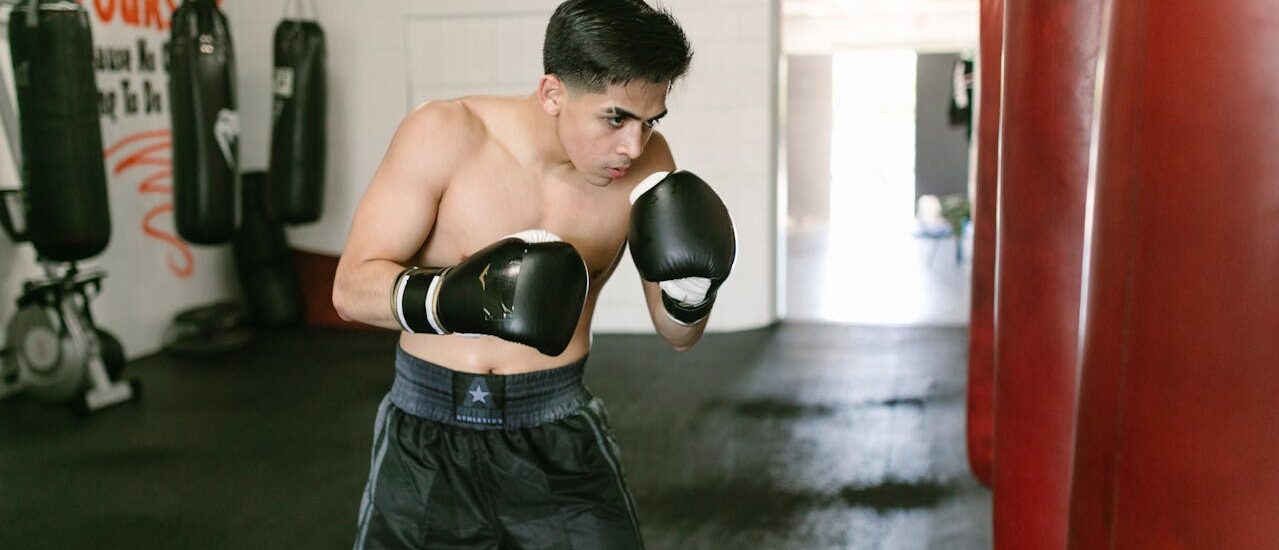
- Start in stance – Balanced, hands up, eyes on your opponent.
- As they step in, throw a tight left hook – Elbow bent, palm facing you or down.
- Pivot on the lead foot – Turn your lead foot and hips to the outside (usually about 45–90 degrees).
- Move your head with the punch – Your upper body rotates with the pivot, pulling you out of danger.
- Reset or counter – You’re now at an angle, ready to fire again or step away.
The punch and the pivot should happen at the same time—that’s what makes it a check hook, not just a hook followed by movement.
Famous Examples of the Check Hook
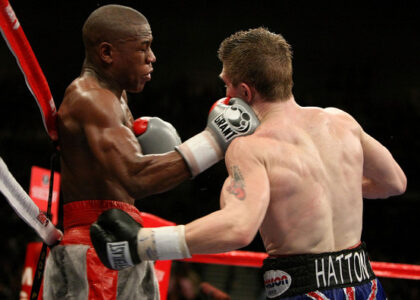
One of the most iconic check hooks in boxing history came from Floyd Mayweather Jr. against Ricky Hatton. As Hatton rushed in, Mayweather pivoted and landed a perfectly timed check hook that sent Hatton crashing into the corner post. The fight was effectively over from that moment.
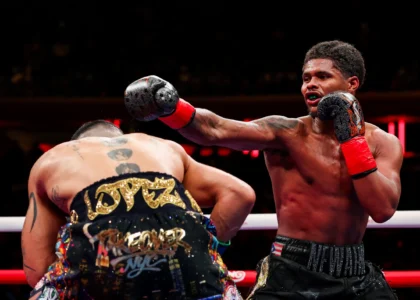
Many elite boxers—past and present—use the check hook as a signature tool because it rewards patience and precision over brute force.
Common Mistakes to Avoid
- Over-swinging the hook instead of keeping it compact
- Pivoting too late, after the punch lands
- Dropping the right hand while throwing the hook
- Using it without proper timing, which can leave you off-balance
The check hook isn’t about speed alone—it’s about anticipation.
When to Use the Check Hook
The best time to throw a check hook is when:
- Your opponent is stepping straight in
- They’re throwing wide punches
- They’re pressuring without cutting off the ring
- You want to exit safely while scoring
It’s especially effective against aggressive fighters who rely on volume and forward momentum.
Final Thoughts
The check hook is a reminder that boxing is as much a thinking person’s sport as it is a physical one. It rewards awareness, timing, and footwork—skills that separate good boxers from great ones.
Master it, and you won’t just land punches. You’ll control space, frustrate opponents, and turn their aggression against them.